Capstone Project (2019)
Senior engineering students at the University of Waterloo are required to submit a capstone project in order to graduate. In your capstone you must demonstrate the ability to work in a team, adhere to a budget, identify a need and develop a product to address it (while applying an engineering process that goes from concept creation, analysis, validation, prototyping, and fabrication). It all culminates with a giant report and a “demo” day, with prizes and the perpetual respect of your classmates in the line.
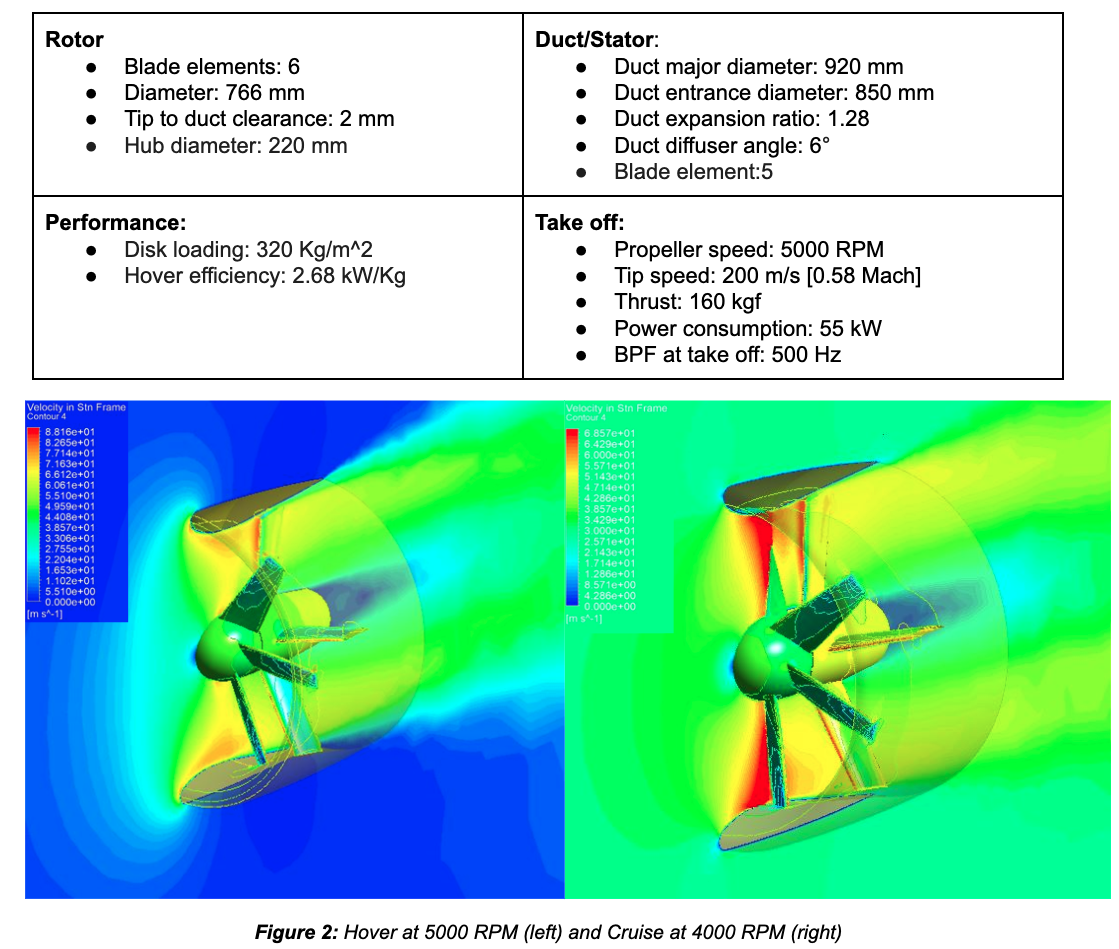
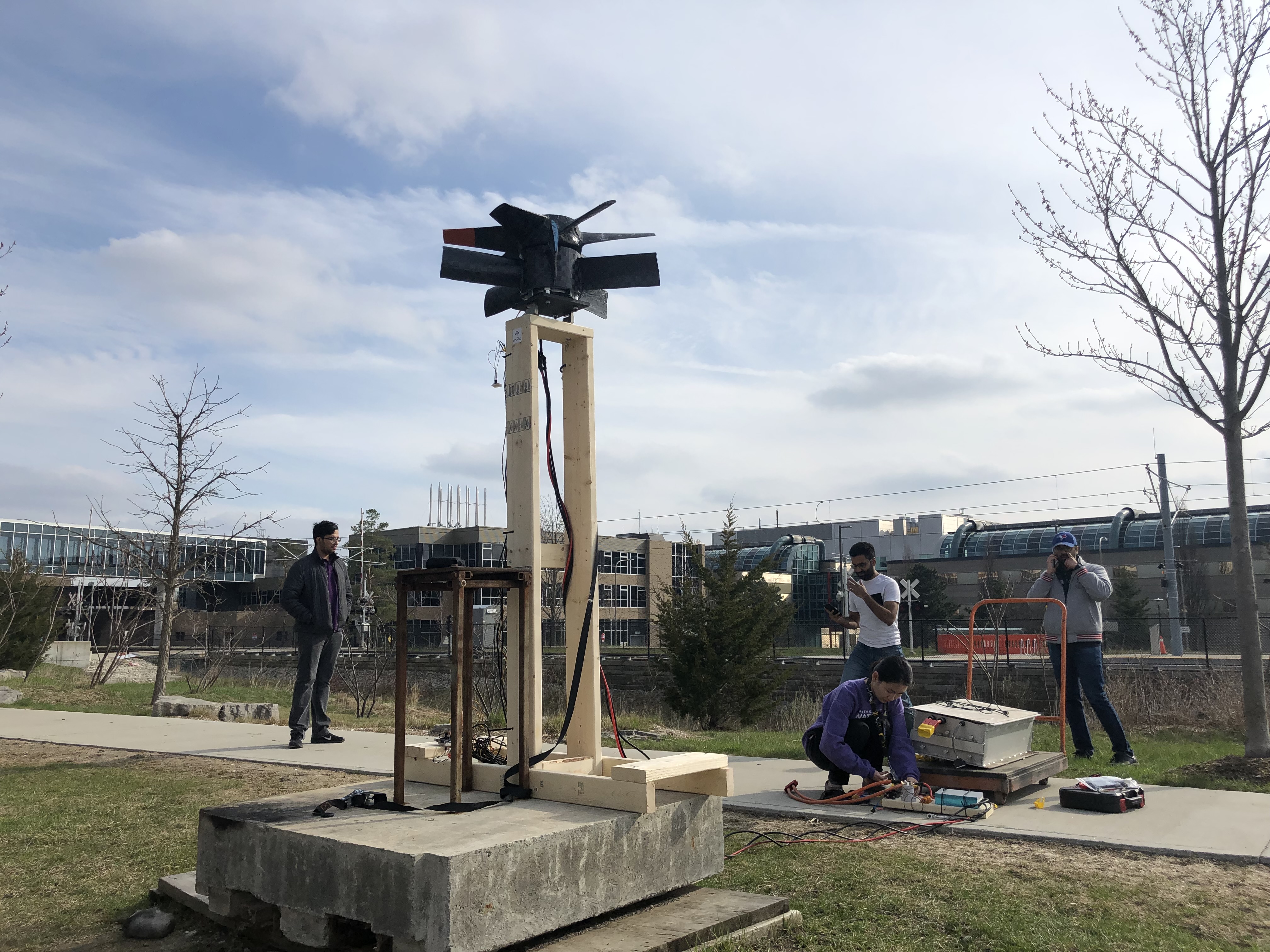
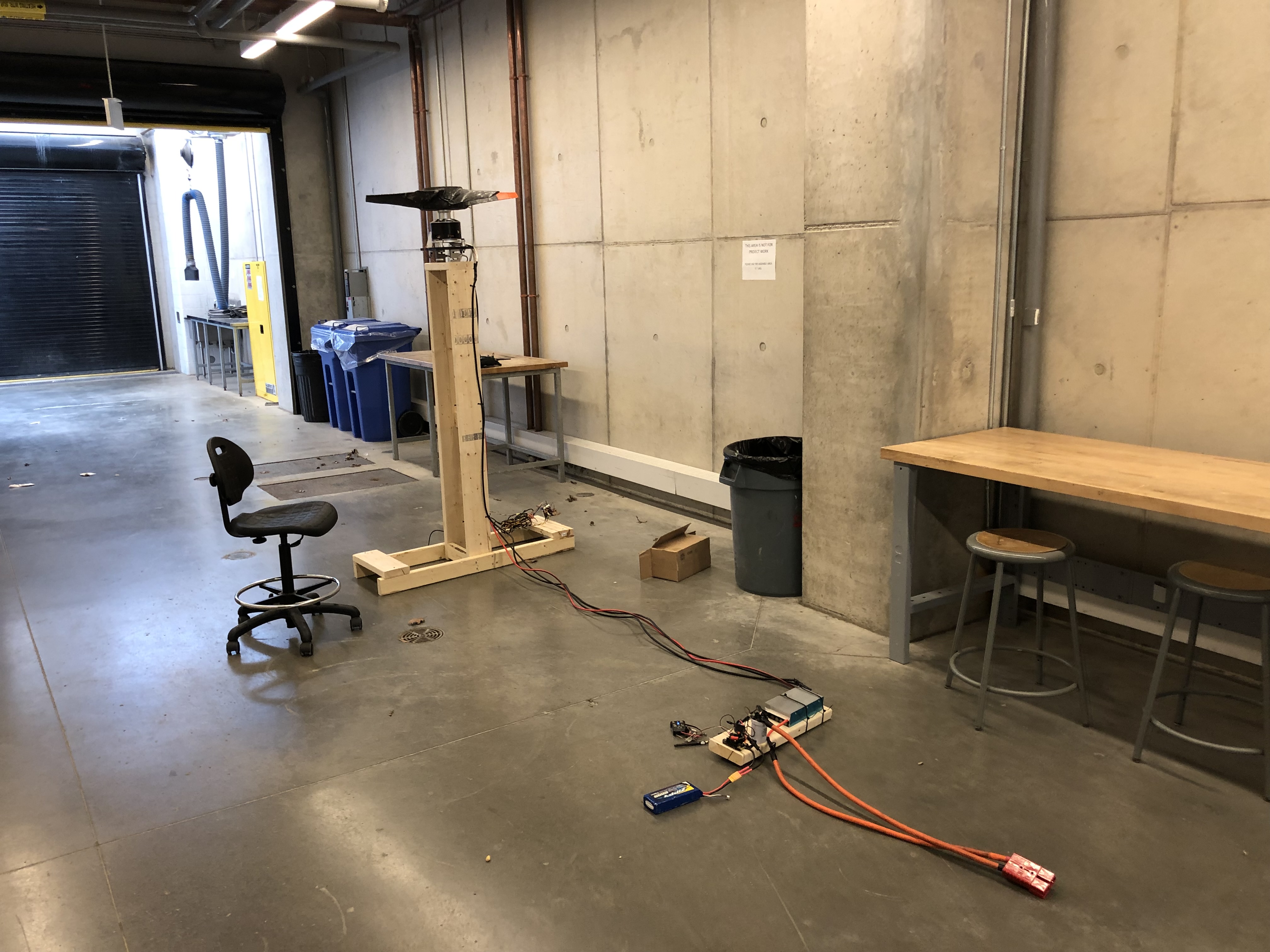
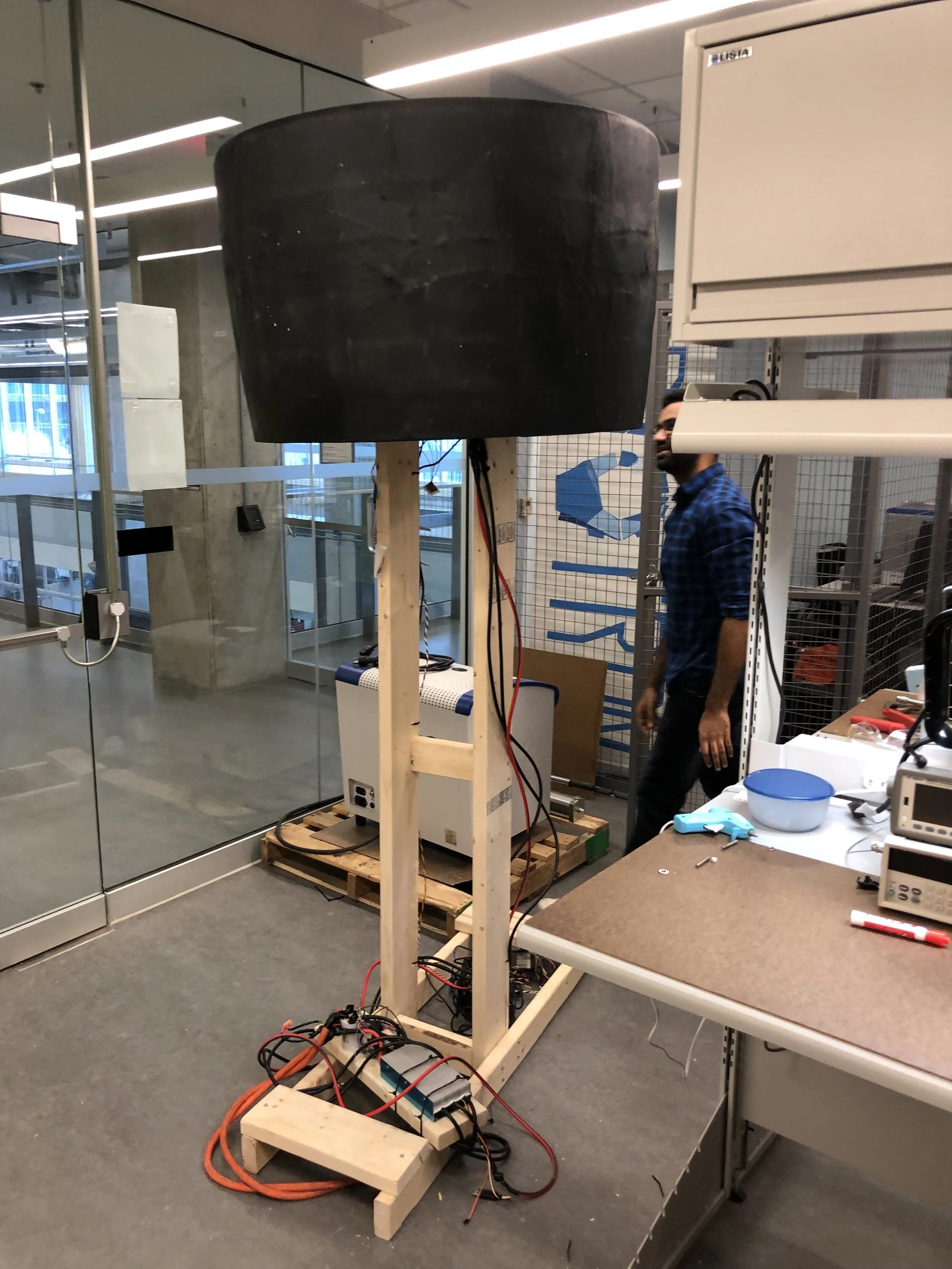
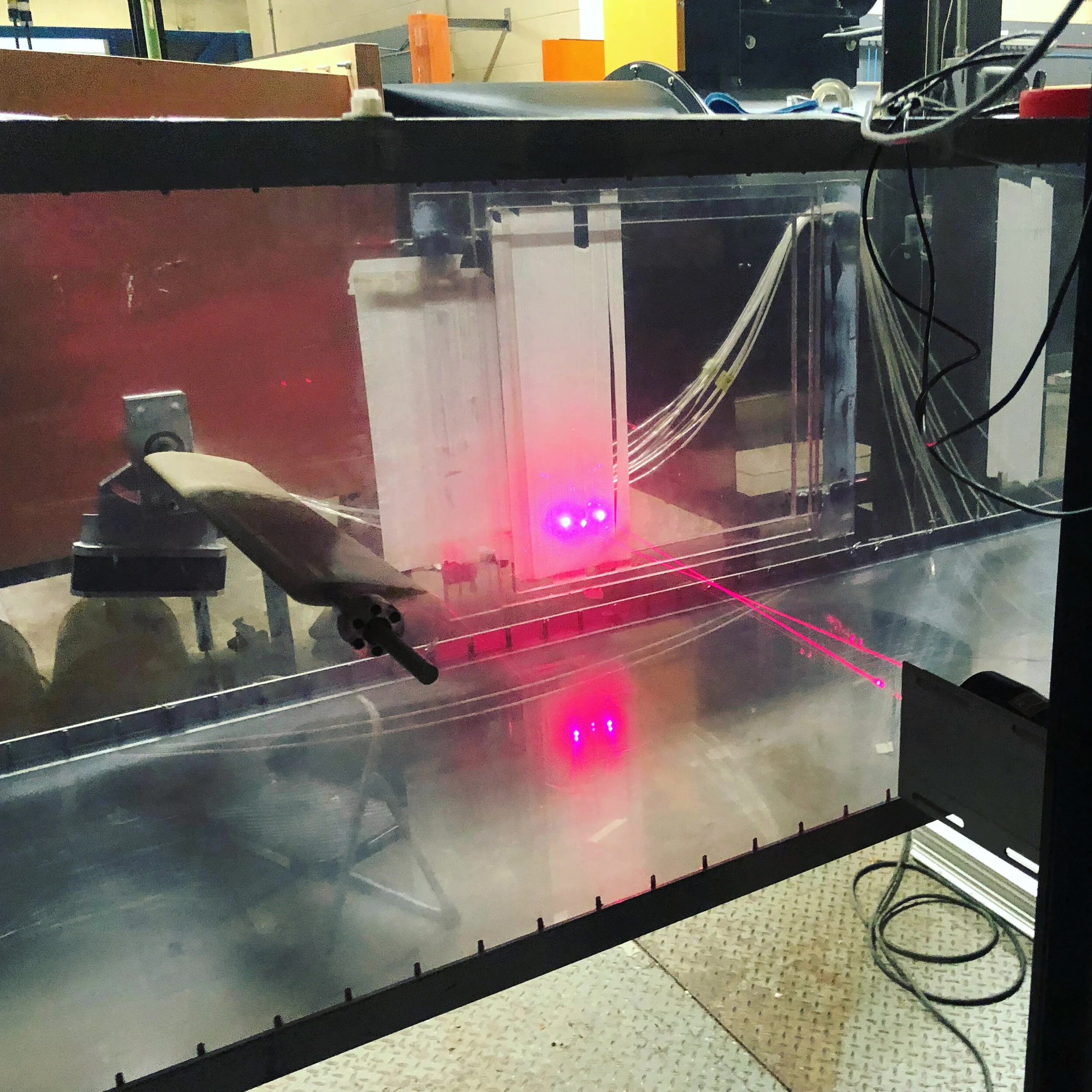
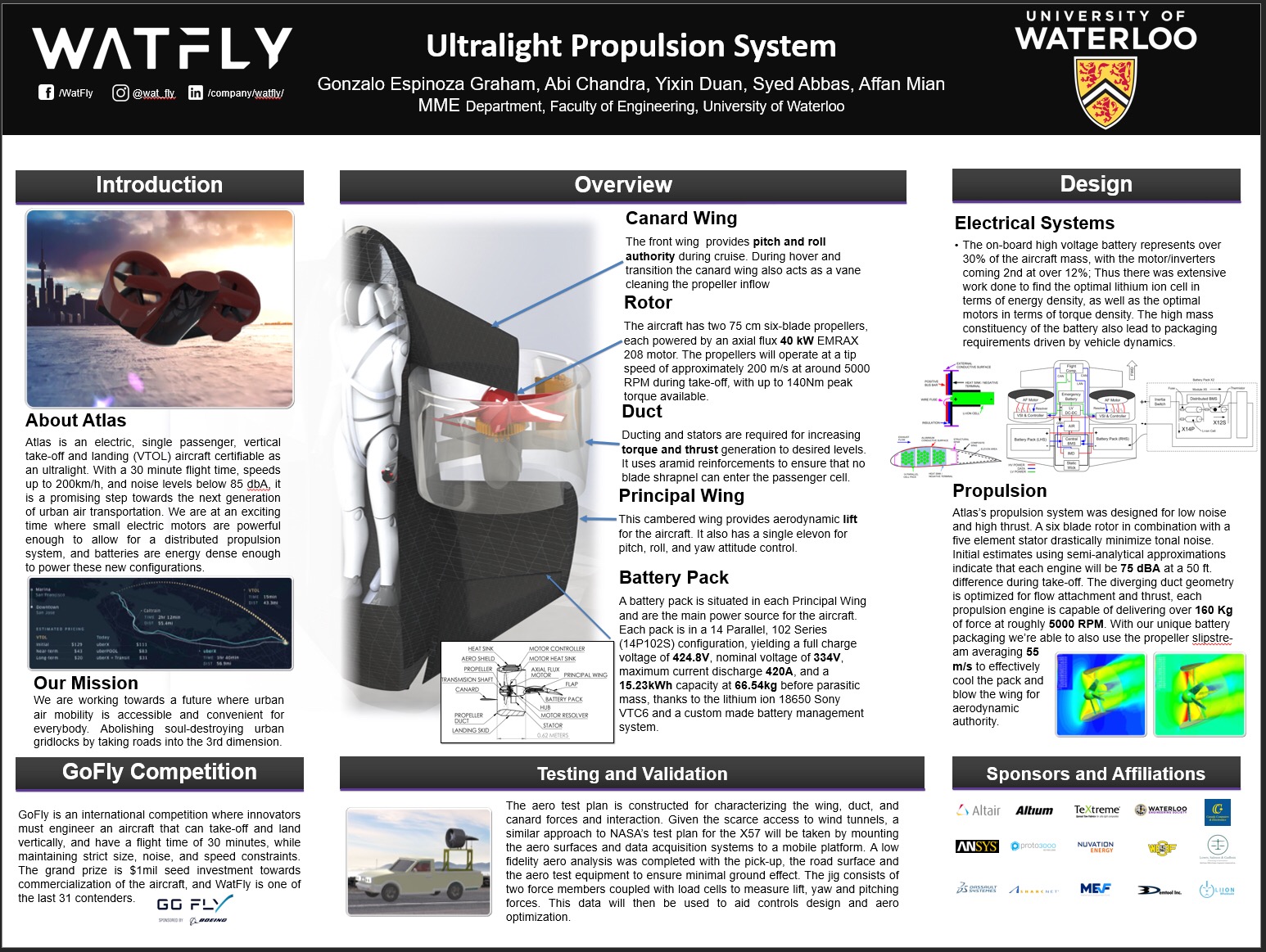
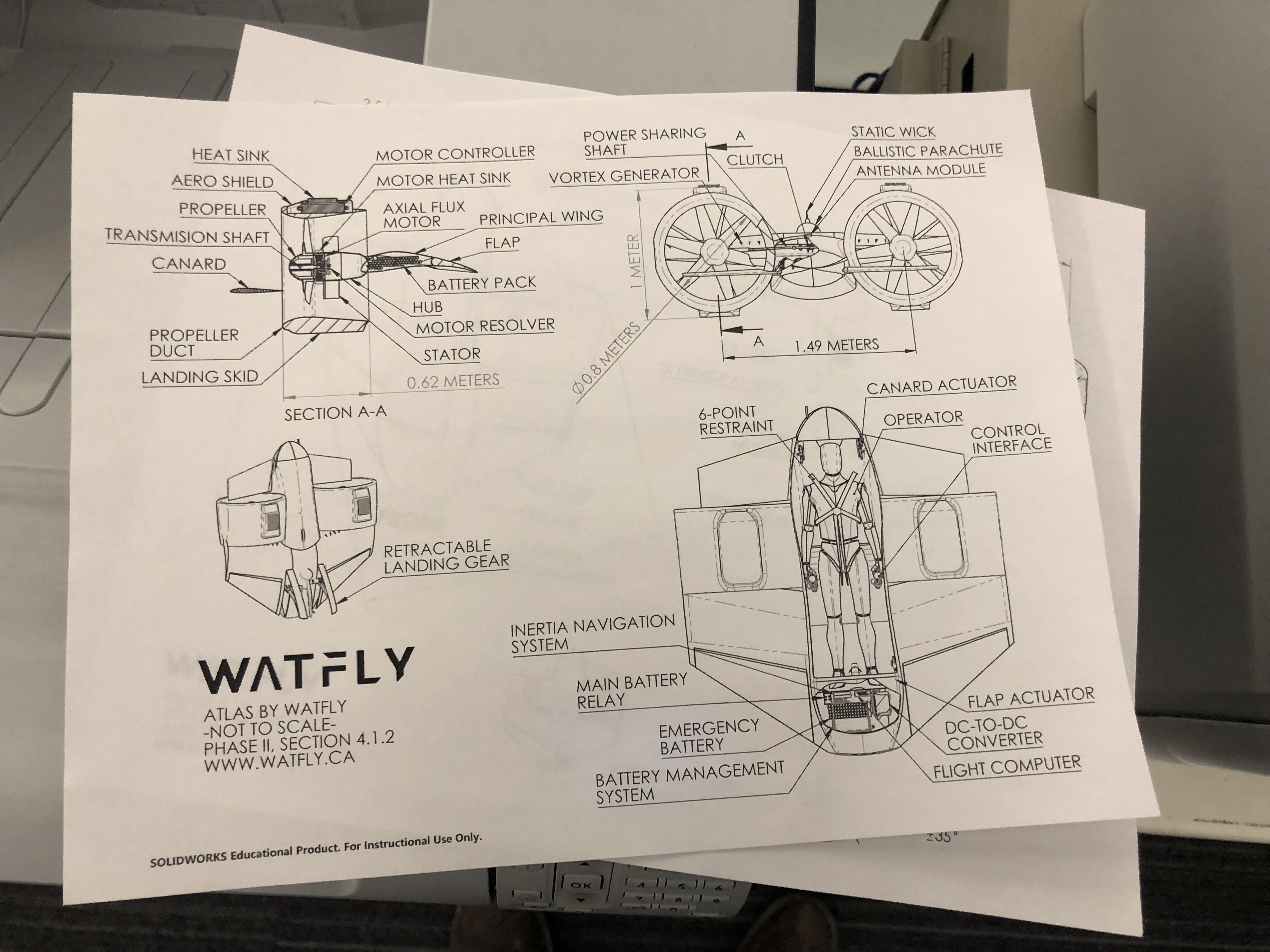
My capstone project was on the development of the powertrain for an electric vertical take-off and landing (EVTOL) aircraft. It involved the design, optimization and prototyping of an electric ducted fan (which we actually built and tested), a wing integrated battery pack (which we filed for preliminary US patents), and wings to demonstrated the principle of blown lift in a wind tunnel.
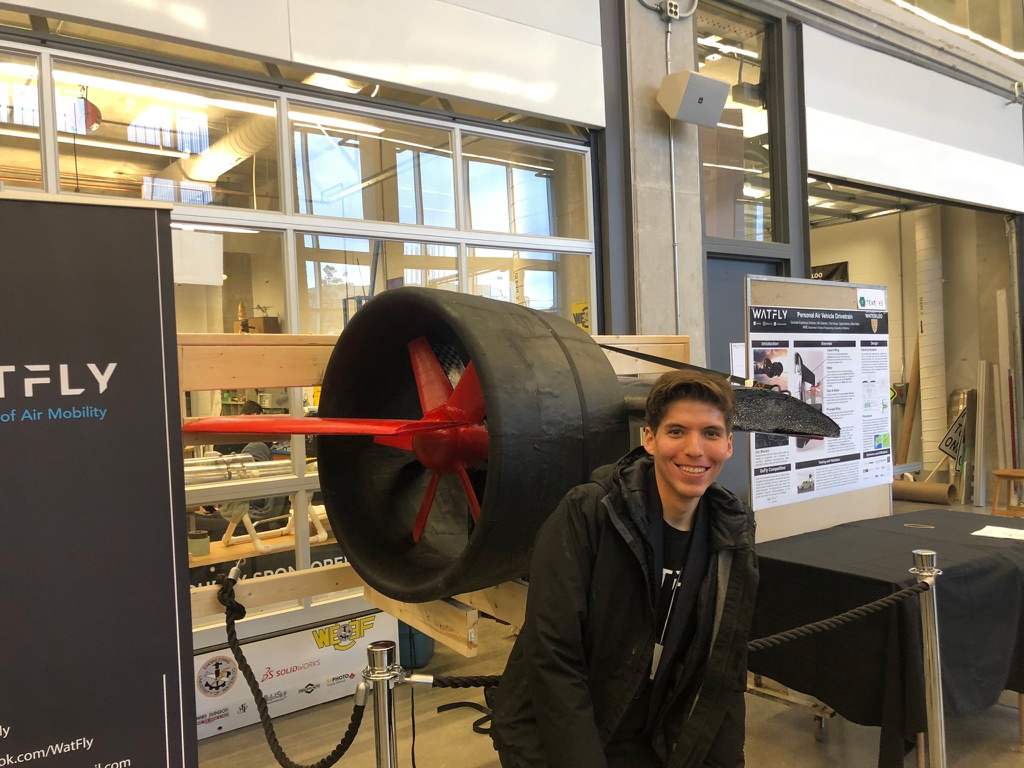
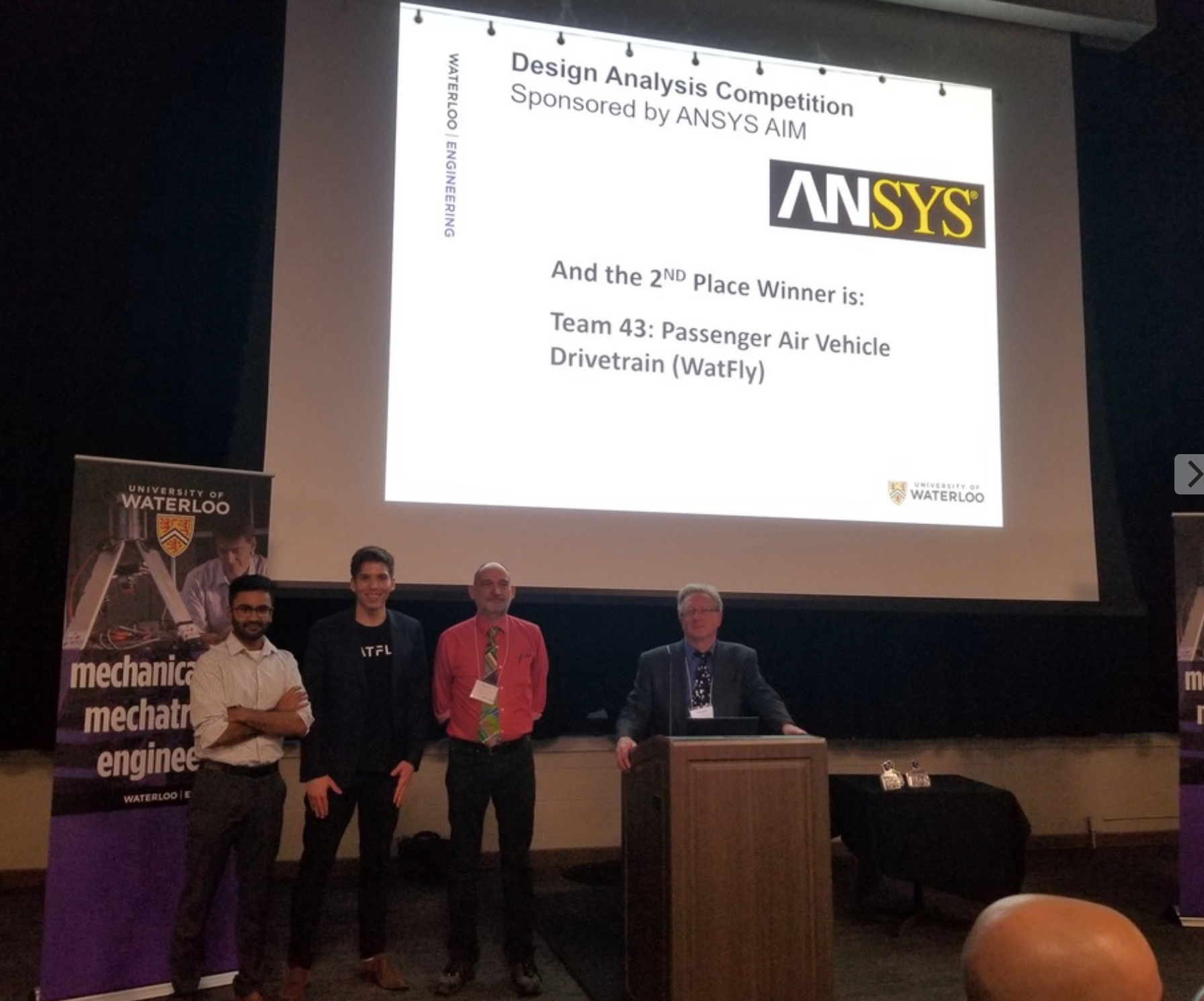
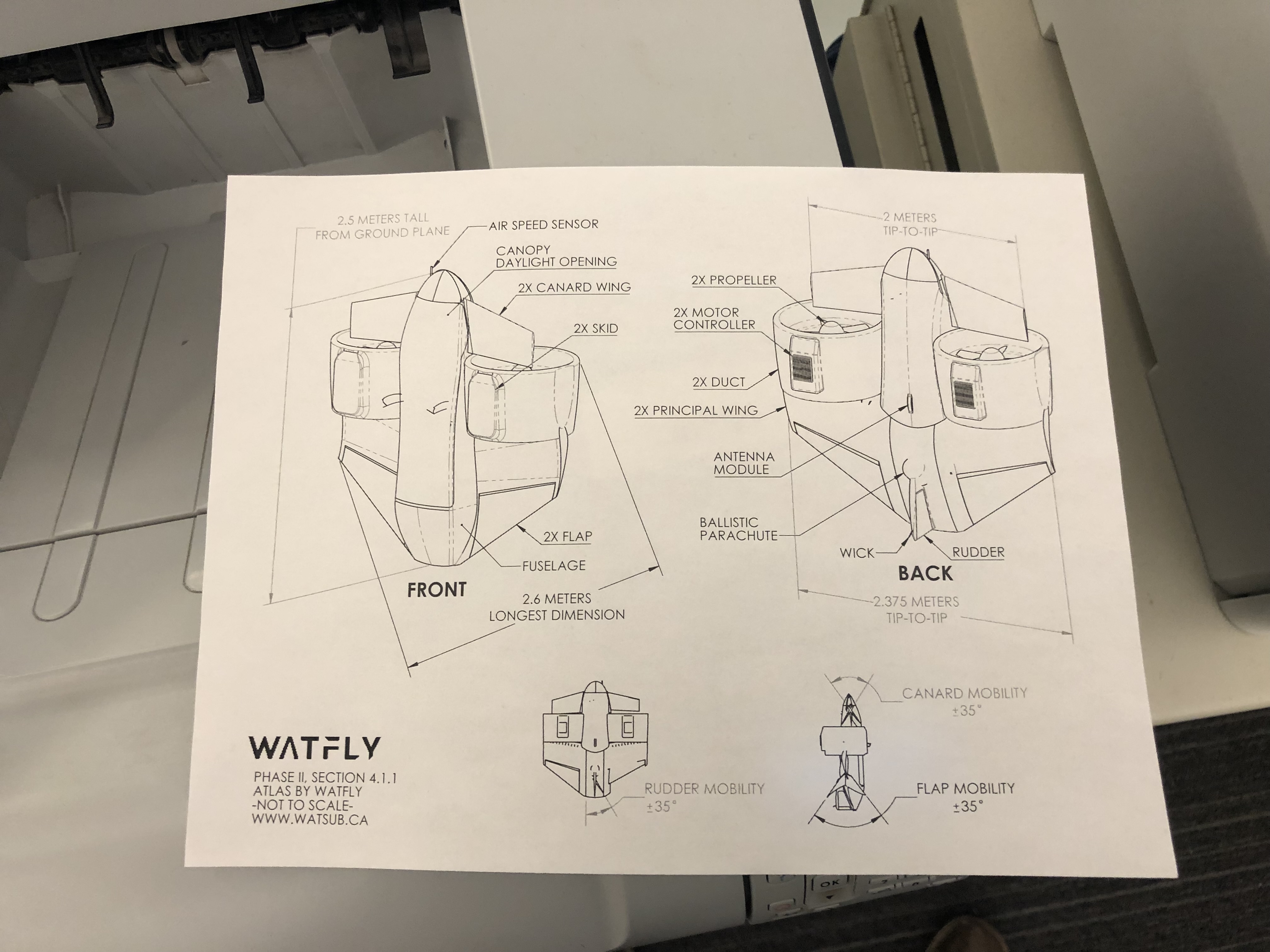
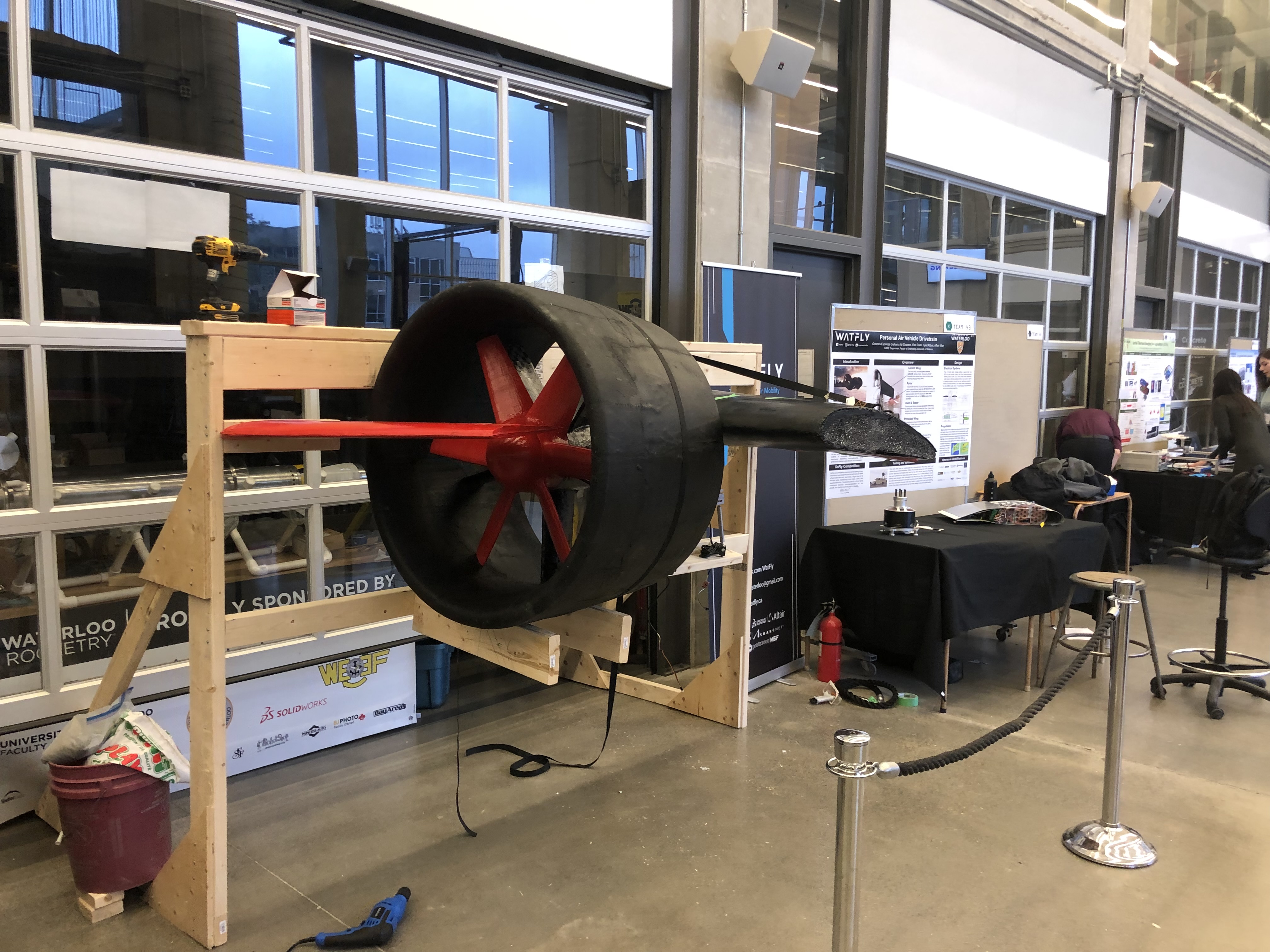
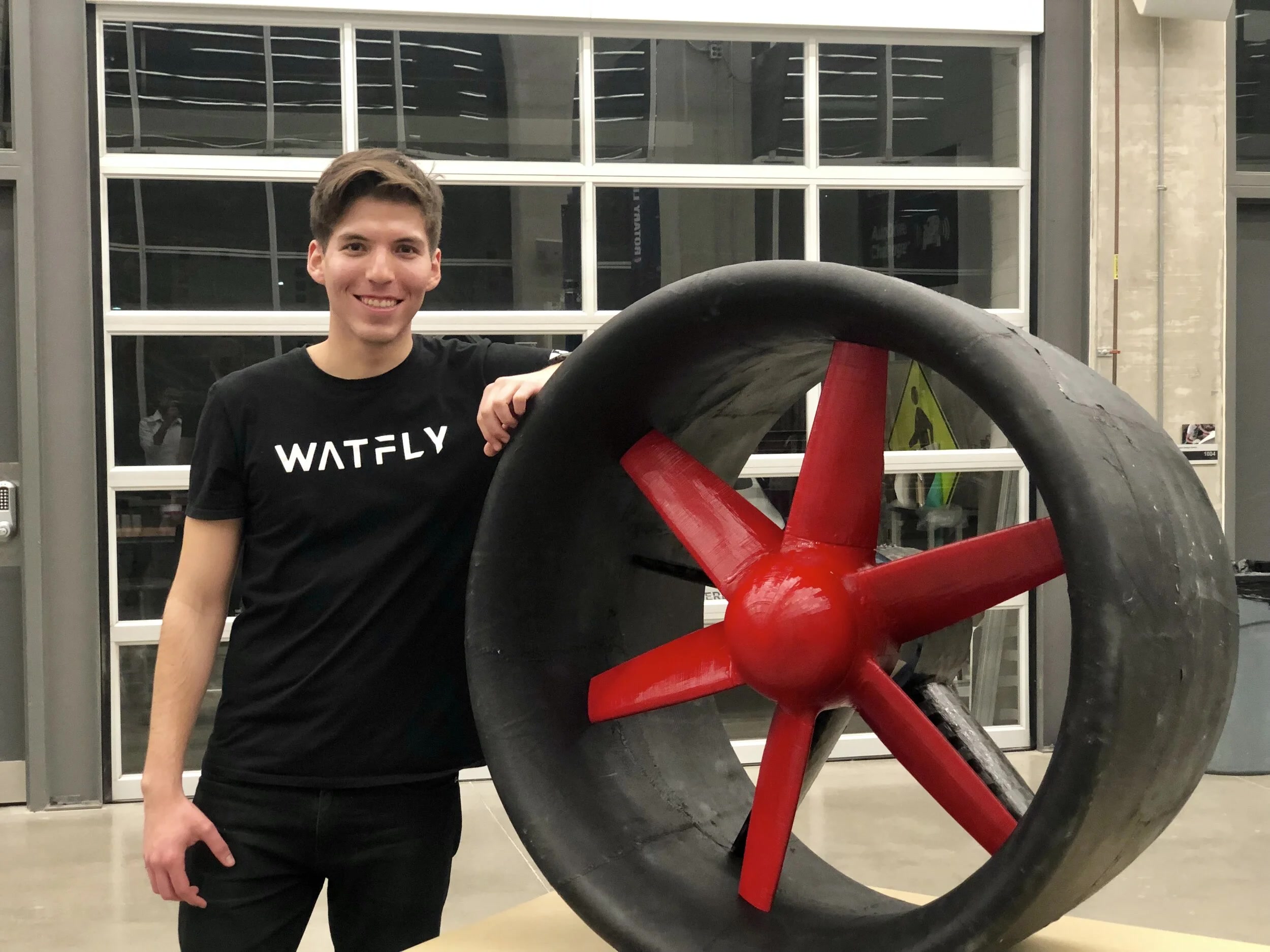
Without going into boring details, the pictures below sum it up pretty well. The 'thing' we built as part of this was the vehicle shown in the poster above under 'Testing and Validation', which is half of a full-scale aircraft, with a fixture to mount it to a pick up truck in order to gather data of how it performs at higher cruise speeds. Along with it, the analytical work to design the aerodynamic surfaces, rotor, and make sure the system worked. We won the ANSYS engineering analysis award and got 2nd place in the people’s choice award, not a bad way of ending my undergrad.
Battery pack
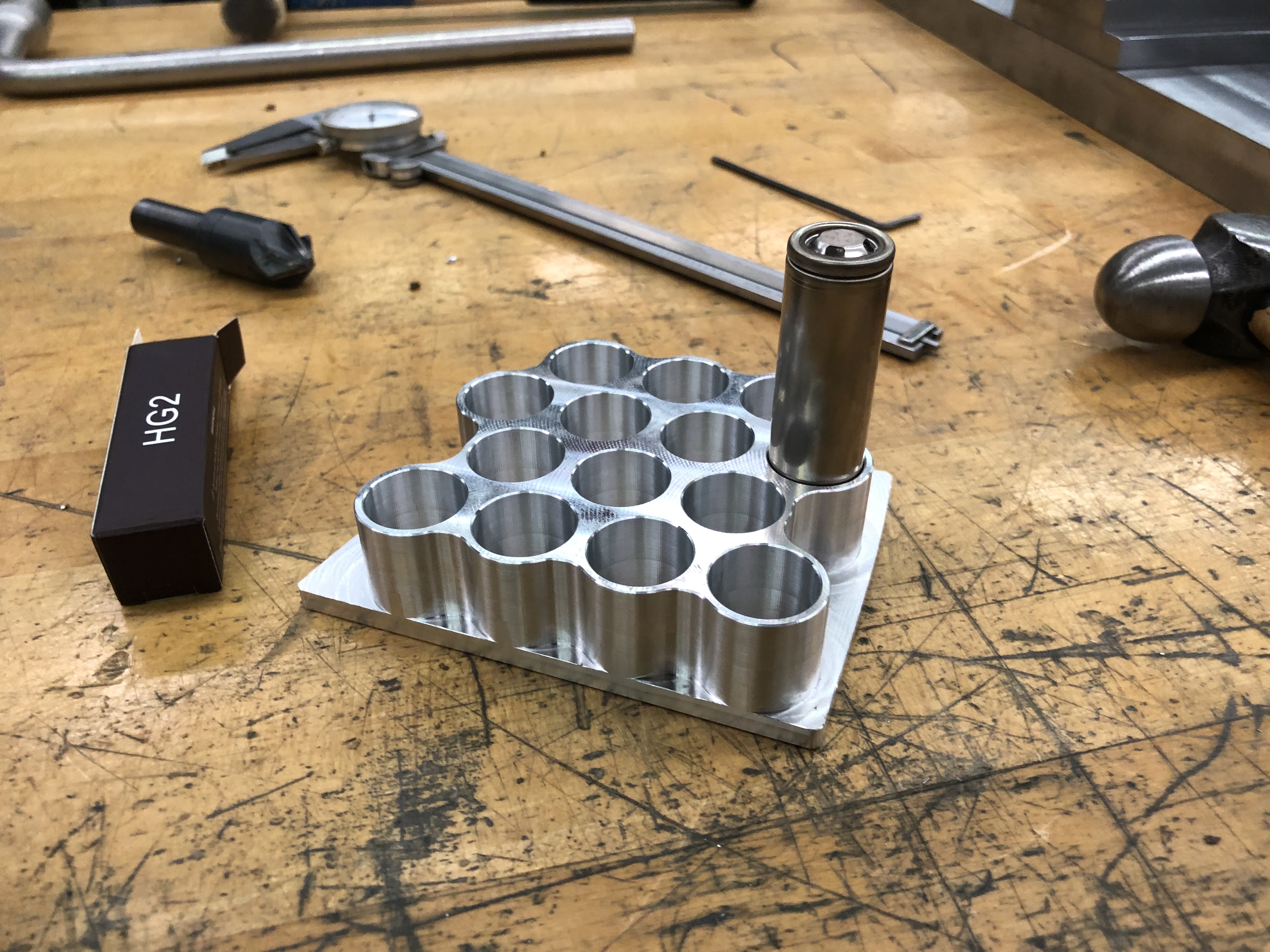
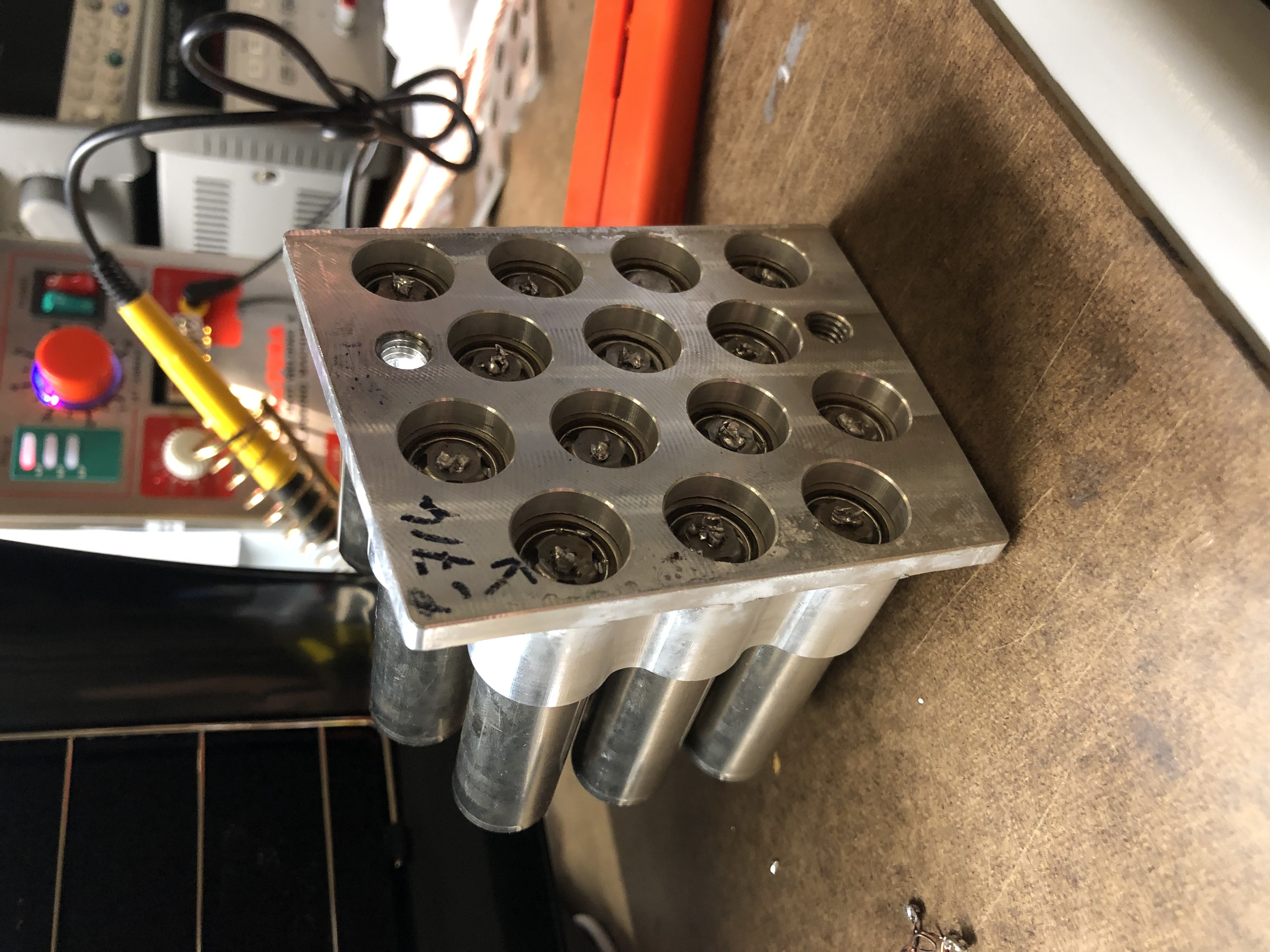
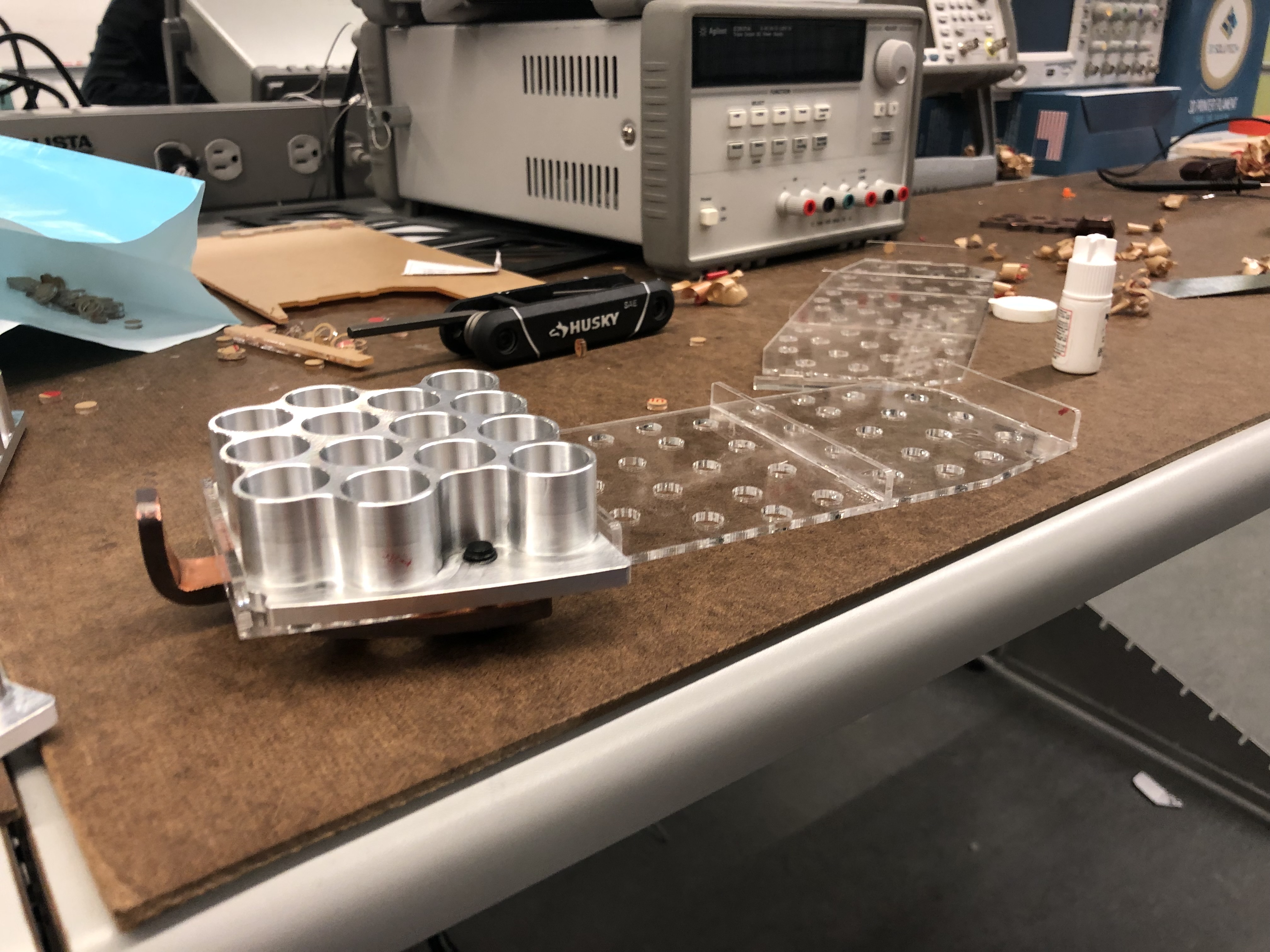
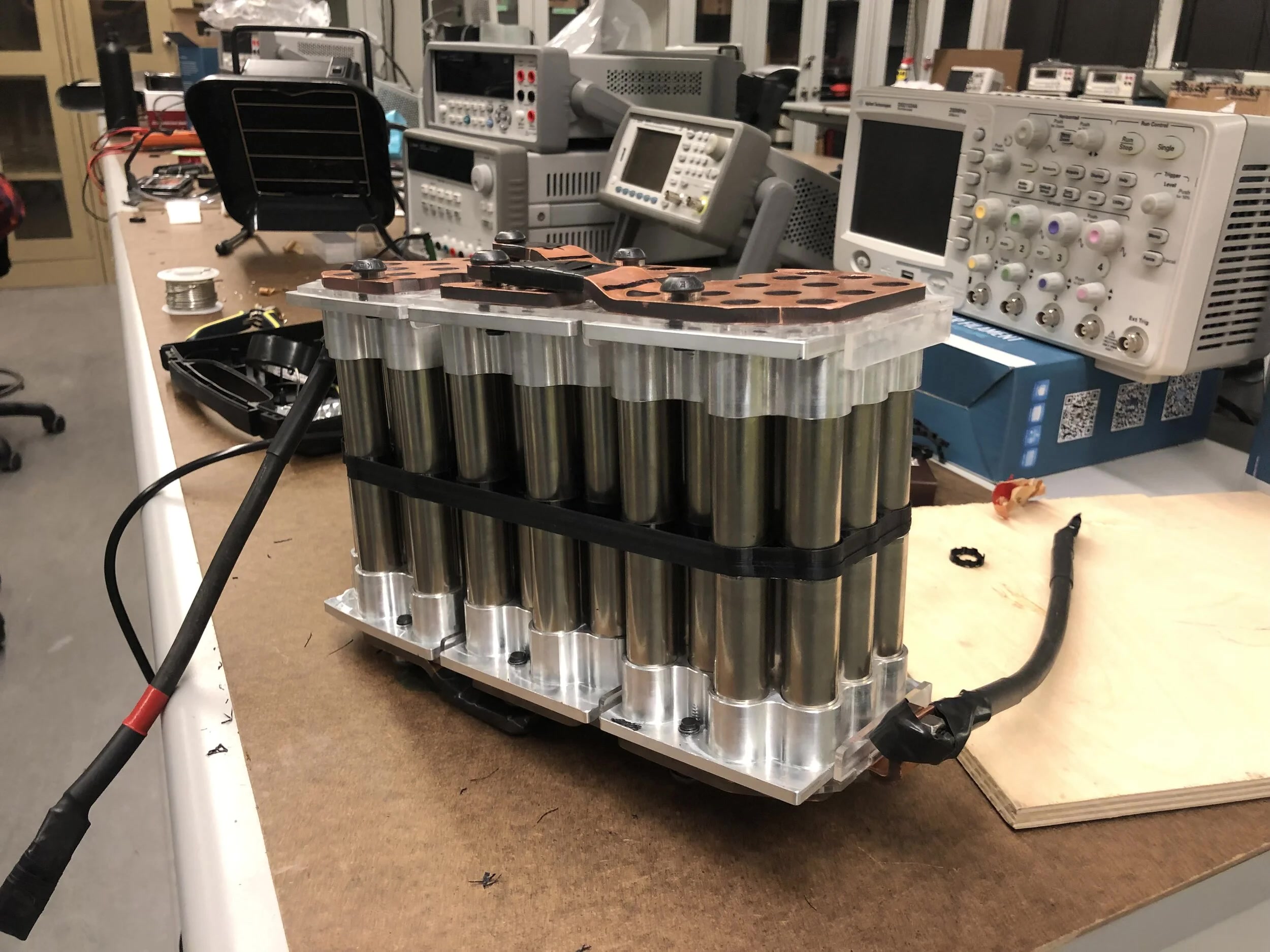
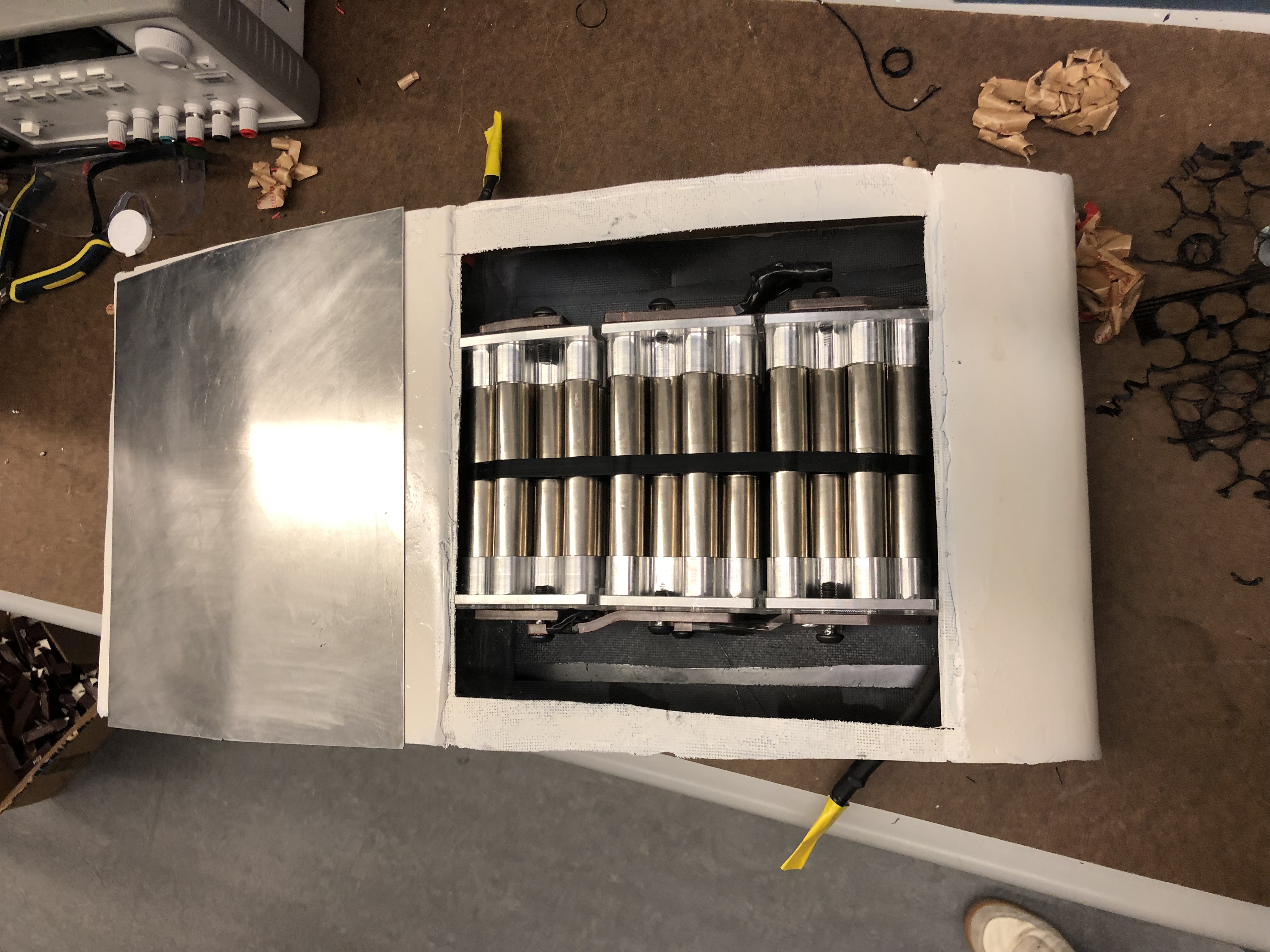
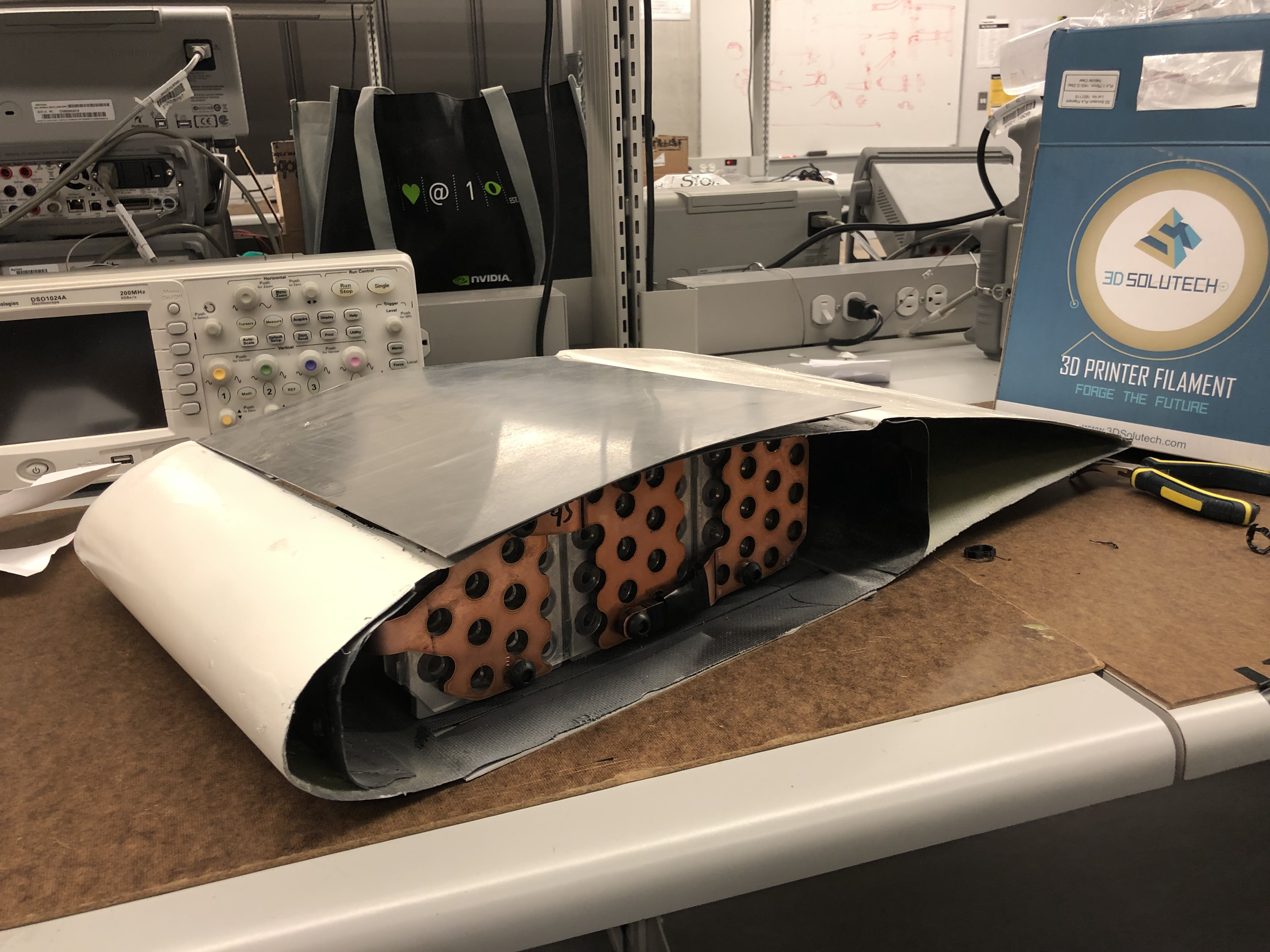
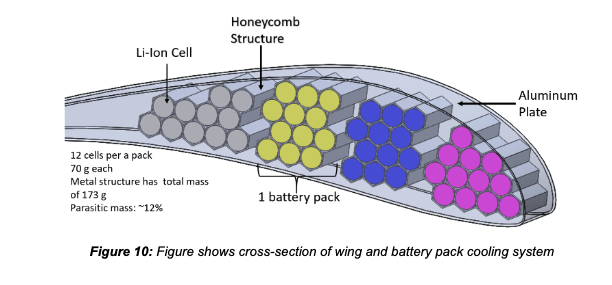
Most of the aircraft’s energy lived inside the wings, not in a box behind the seat. We packaged twin high-voltage accumulators so mass and volume tracked the lifting surfaces, kept bus runs short to the nacelles, and treated the pack as part of the airframe: machined enclosures, module frames, and a lot of time at the Bridgeport getting interfaces right before any cell went in.
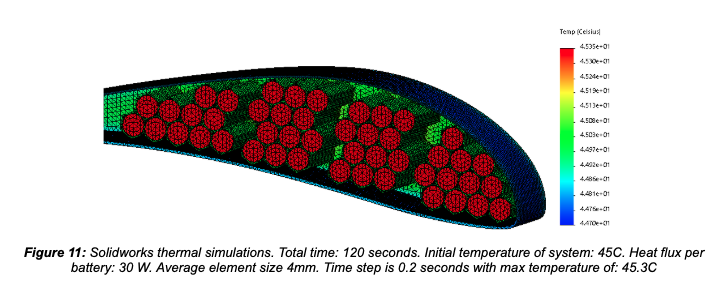
Cell choice was its own mini-project: we screened a large field of 18650 candidates on paper, then characterized the short list under real discharge to see sag and usable capacity versus datasheet marketing. That fed a distributed battery-management layout (per-module sensing and thermistors feeding a central board) so we could save mass and wiring versus a monolithic off-the-shelf BMS, at the cost of doing balancing on the ground. On the safety side we layered crash-sensitive isolation, fused cell taps, and high-voltage architecture review items you would expect for something you intend to hover on. Thermally, the idea was to use the propeller slipstream and conduction into the wing shell; we backed that up with transient thermal models for hover-limit cases so we knew the pack stayed inside cell limits before we ever flew. The plots in the gallery are snapshots from that work.
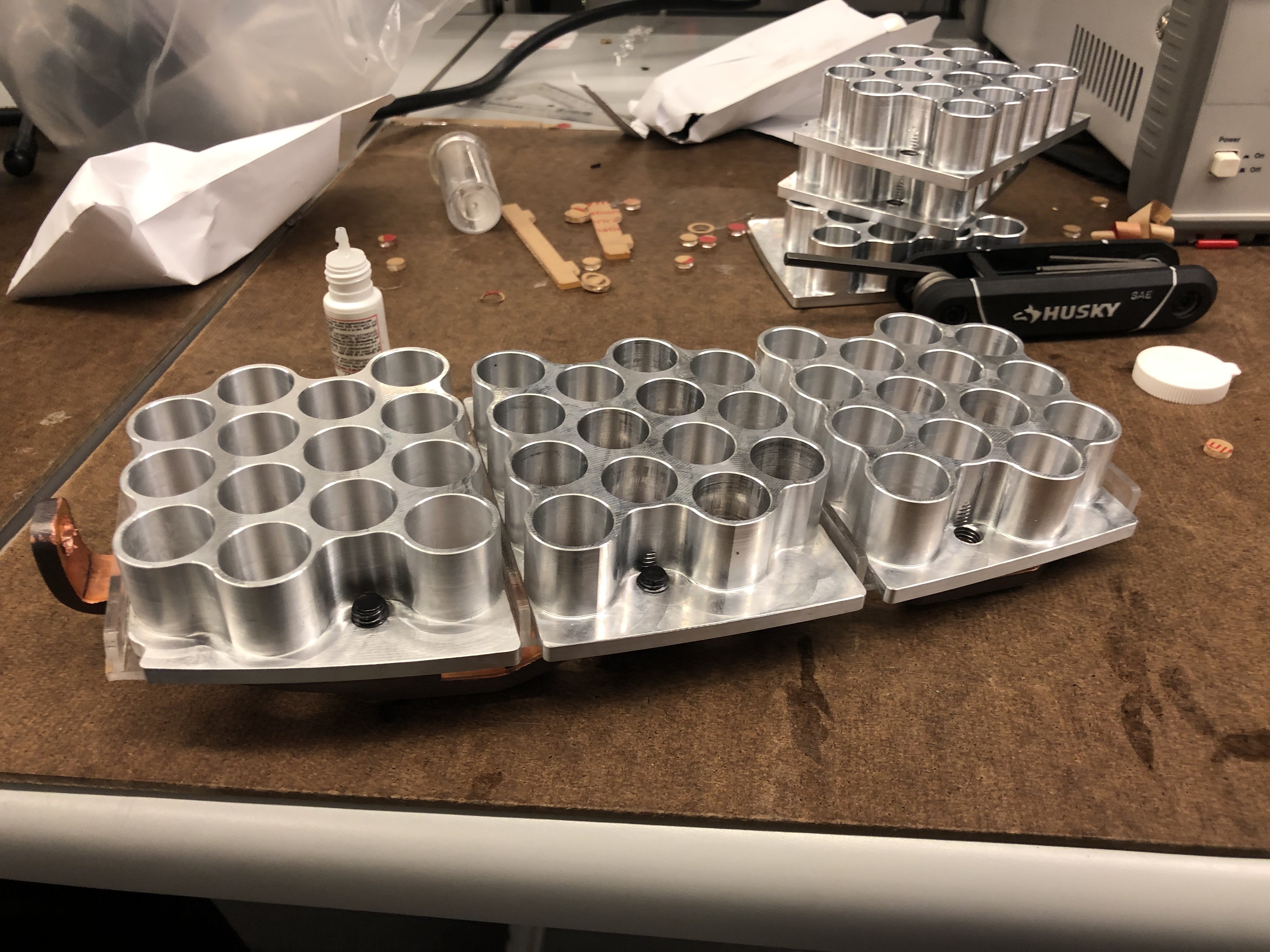
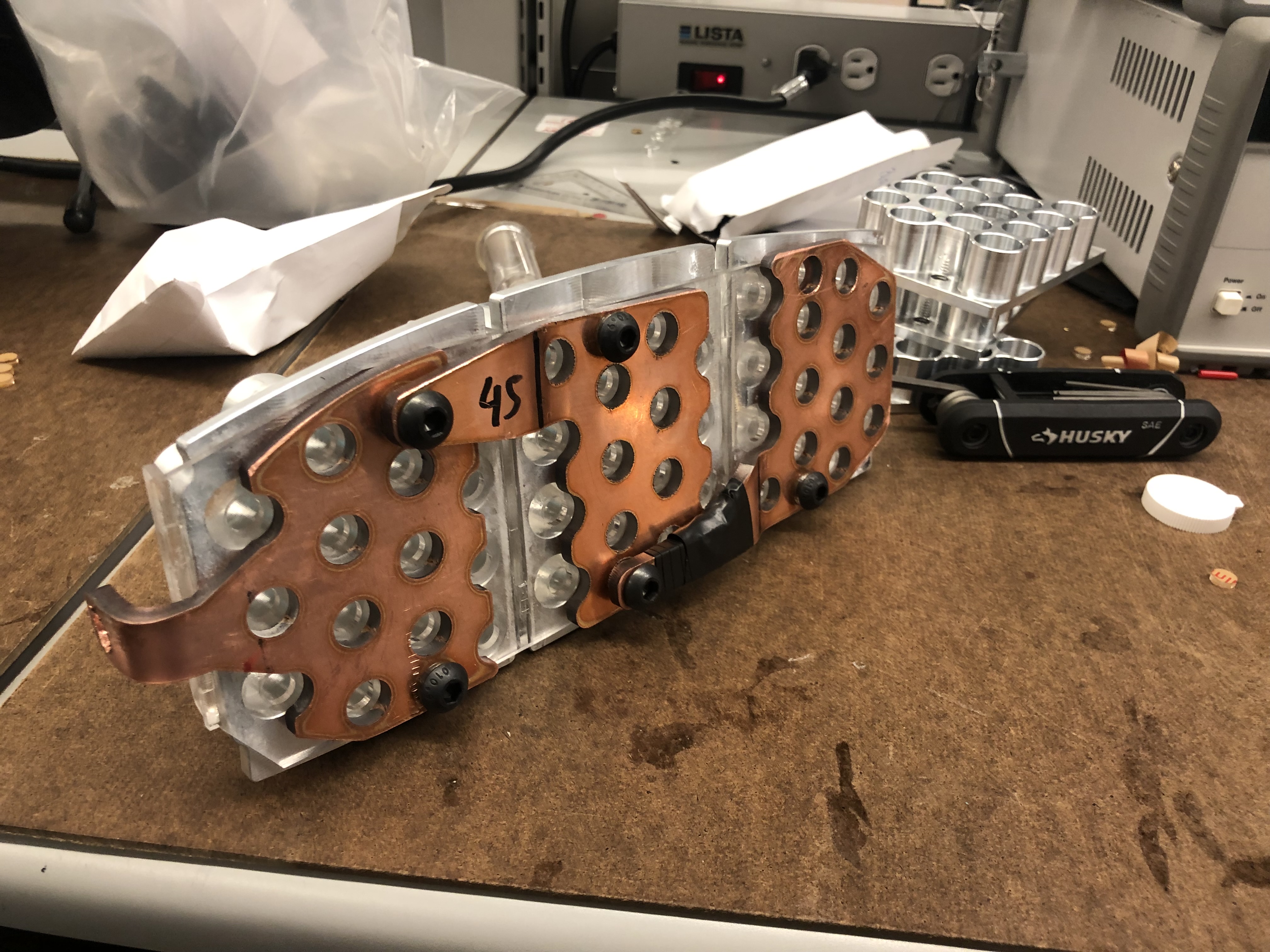
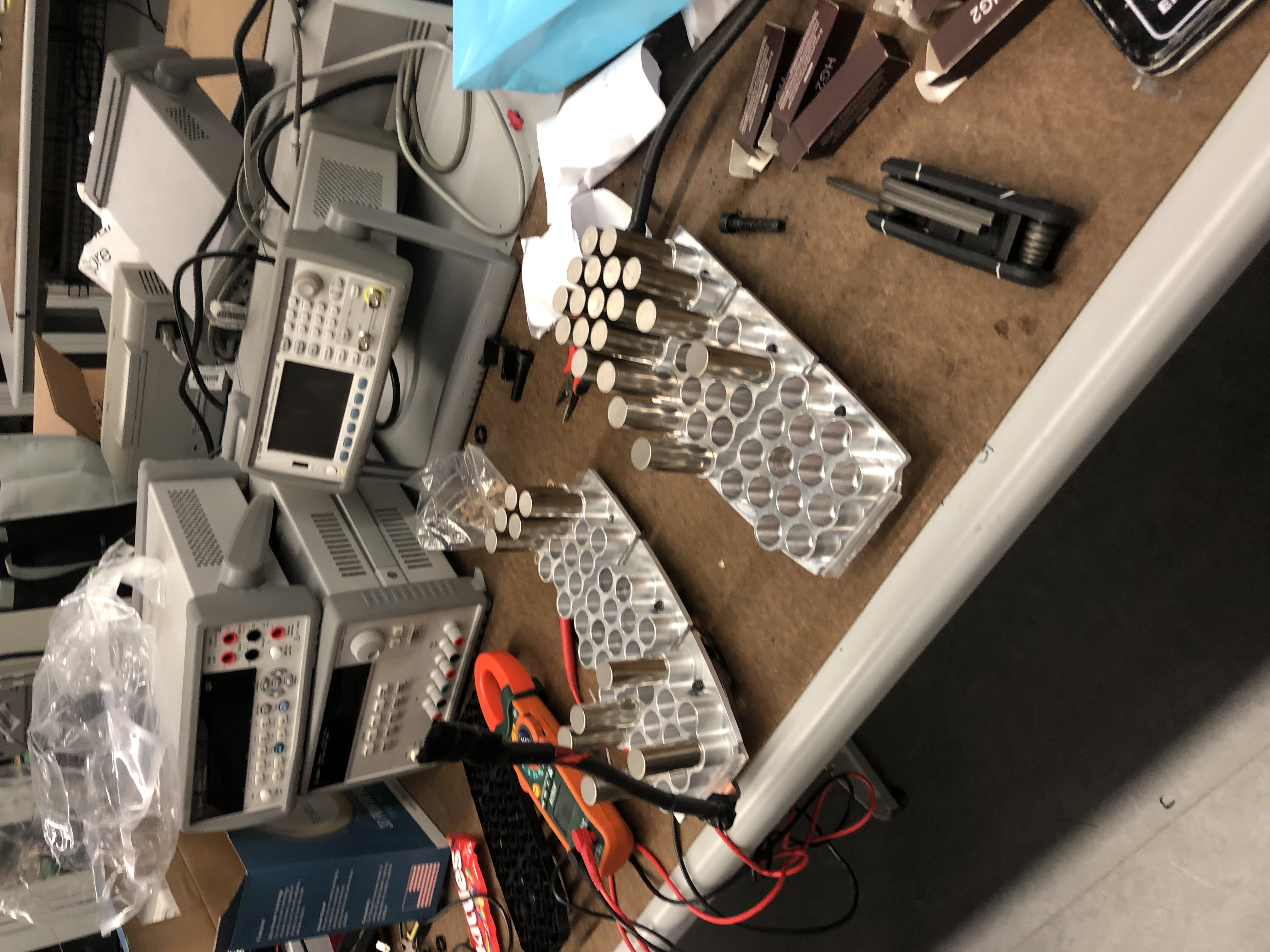
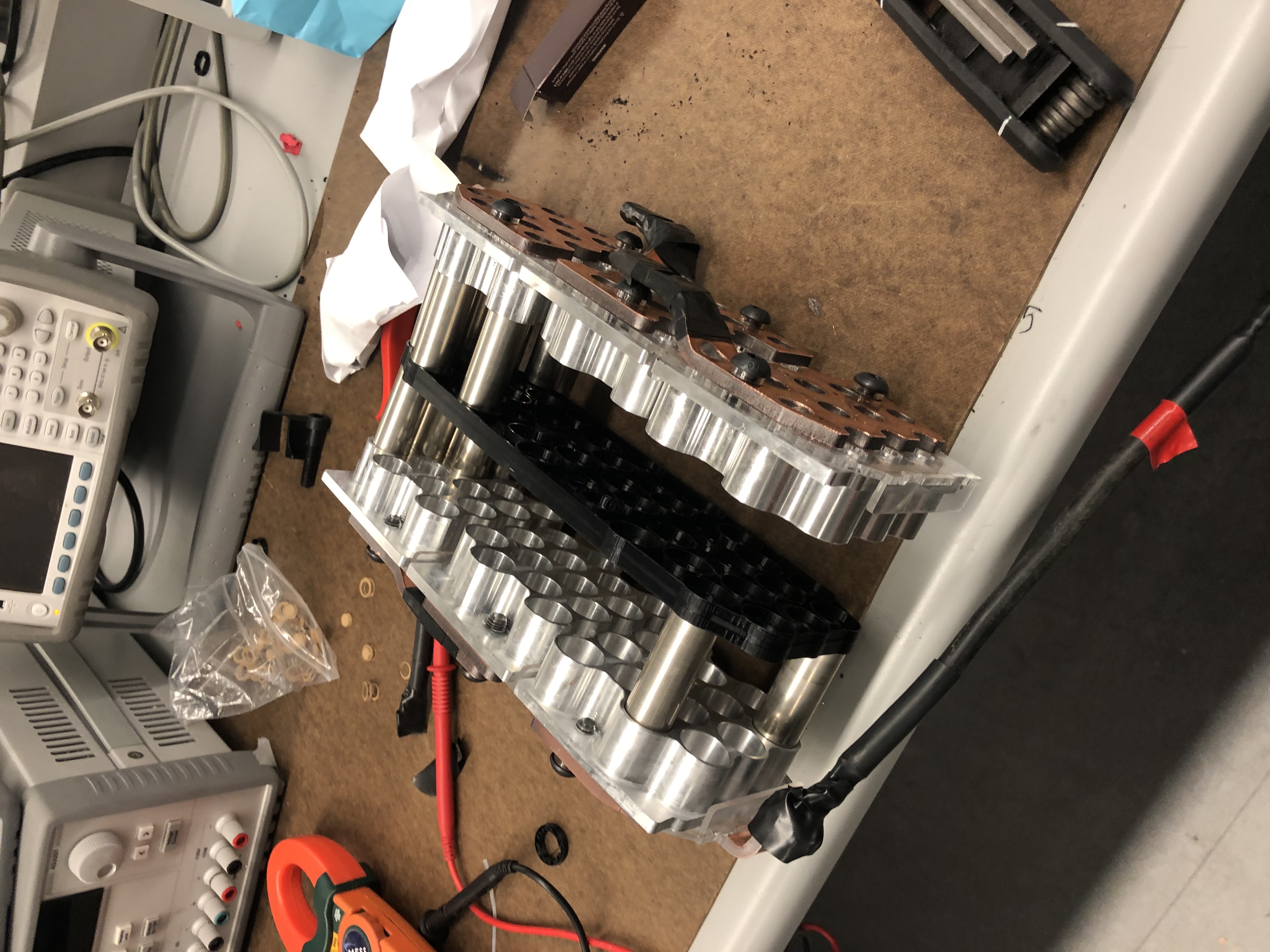
Composite aero surfaces
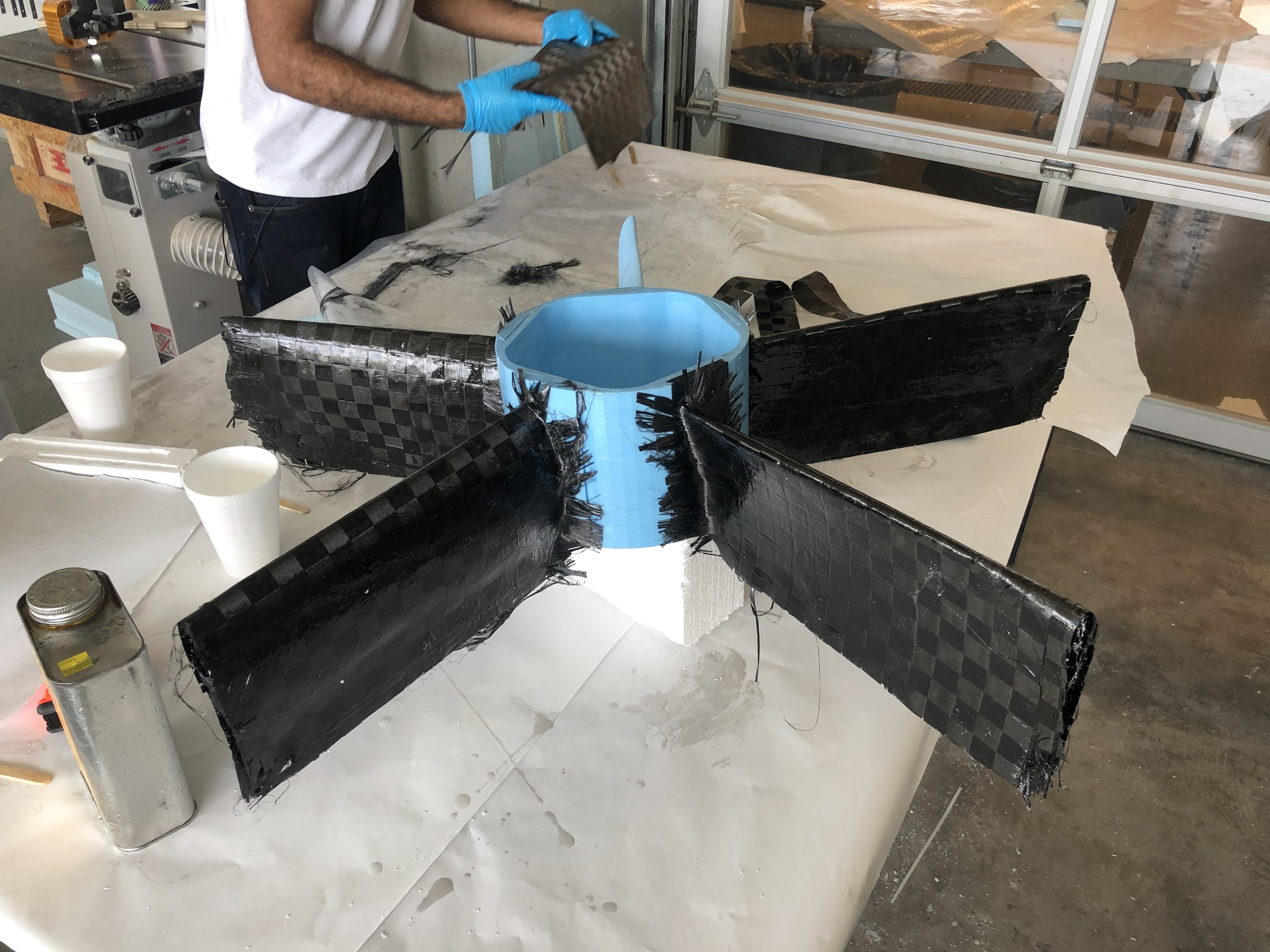
The wings and control surfaces had to be light, stiff, and honest about damage tolerance because they also carried batteries and wiring. We worked from aerospace-style laminate allowables: carbon prepreg with Toray T700-class fabrics for most skins, higher-modulus tape where spars were stiffness-driven, and honeycomb or PMI foam cores where bending stiffness per kilogram mattered most. Quasi-isotropic stackups won out in highly loaded regions so a ding in the hangar did not turn into a mystery delamination later.
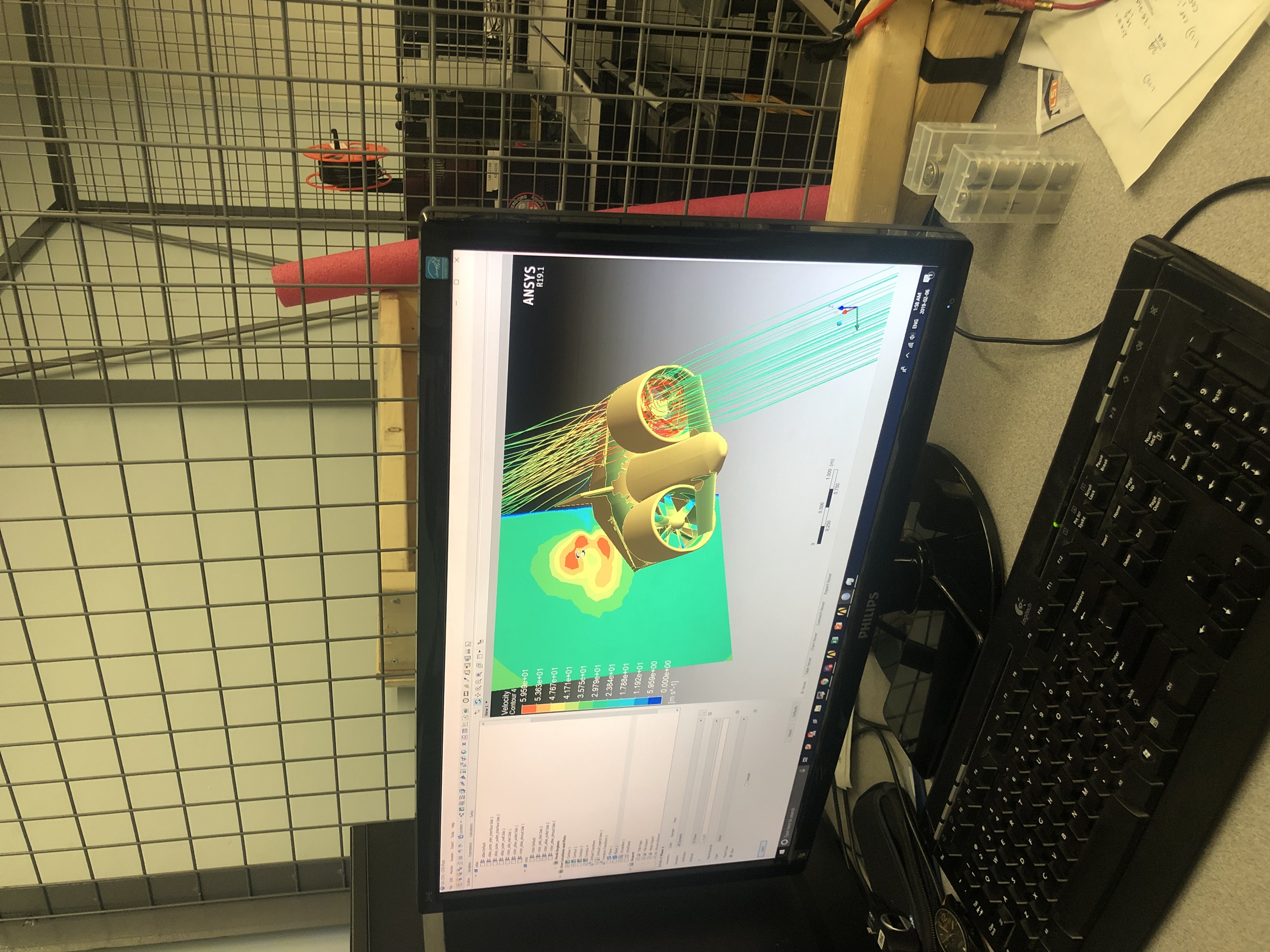
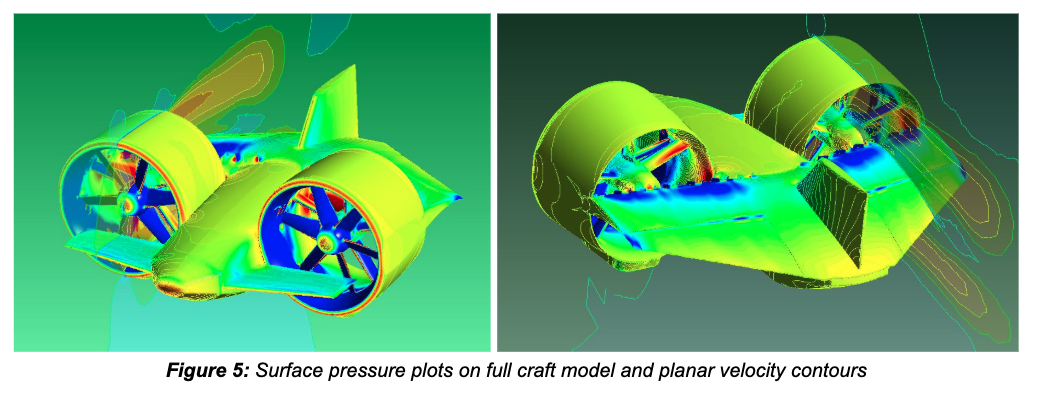
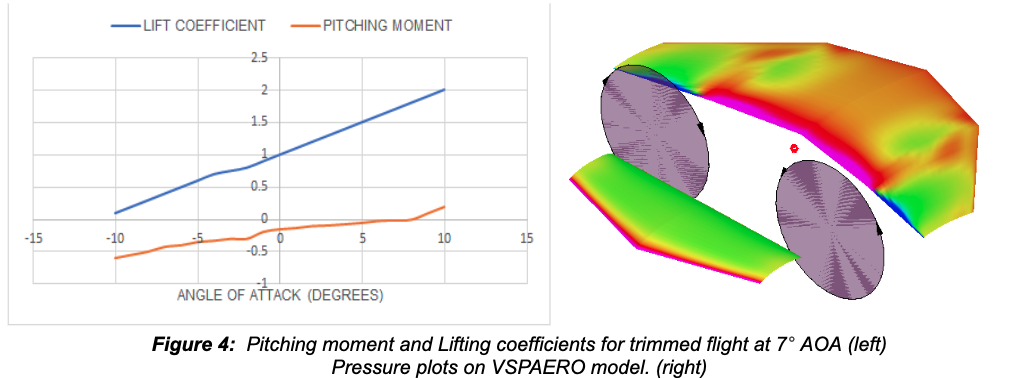
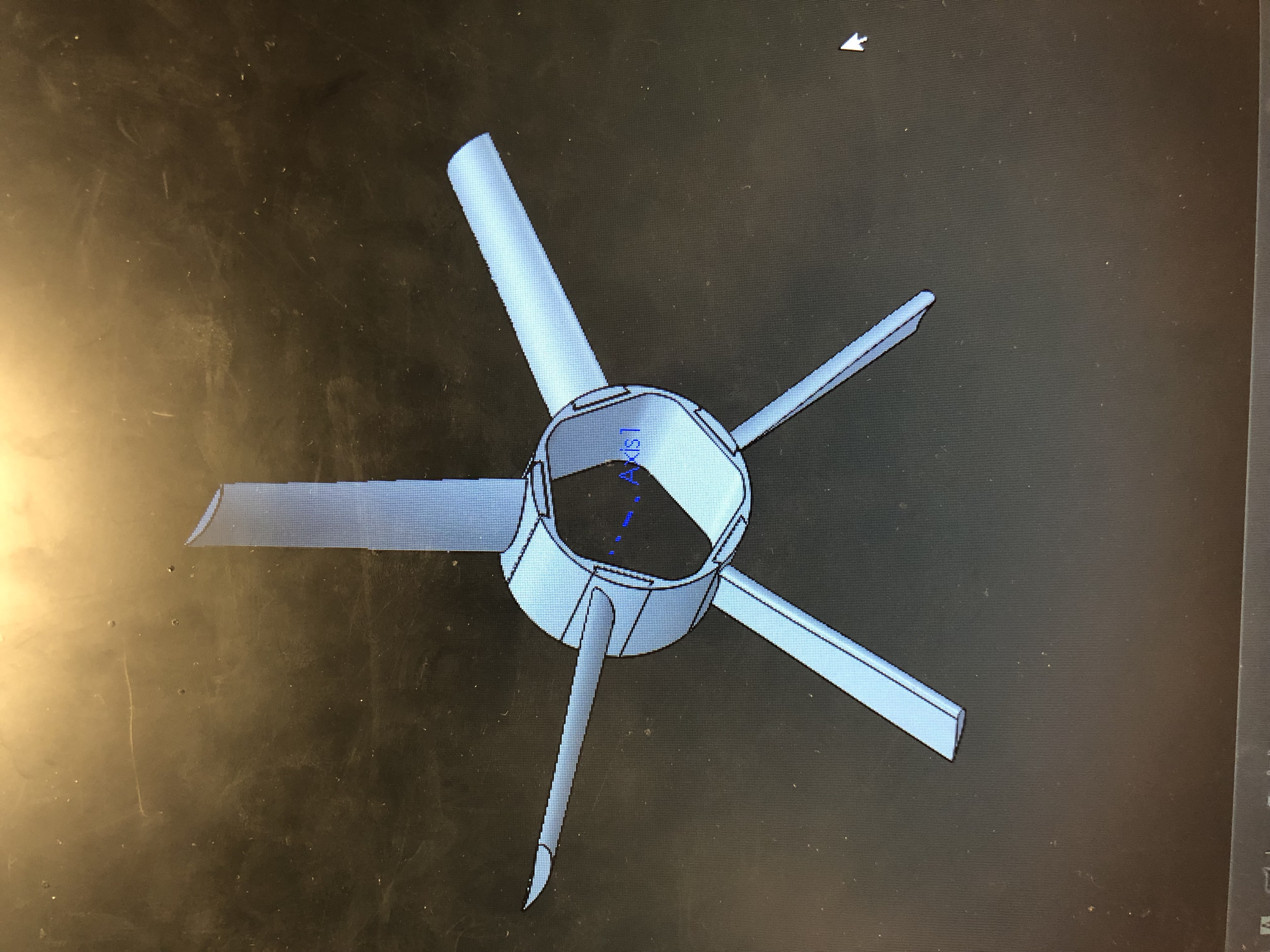
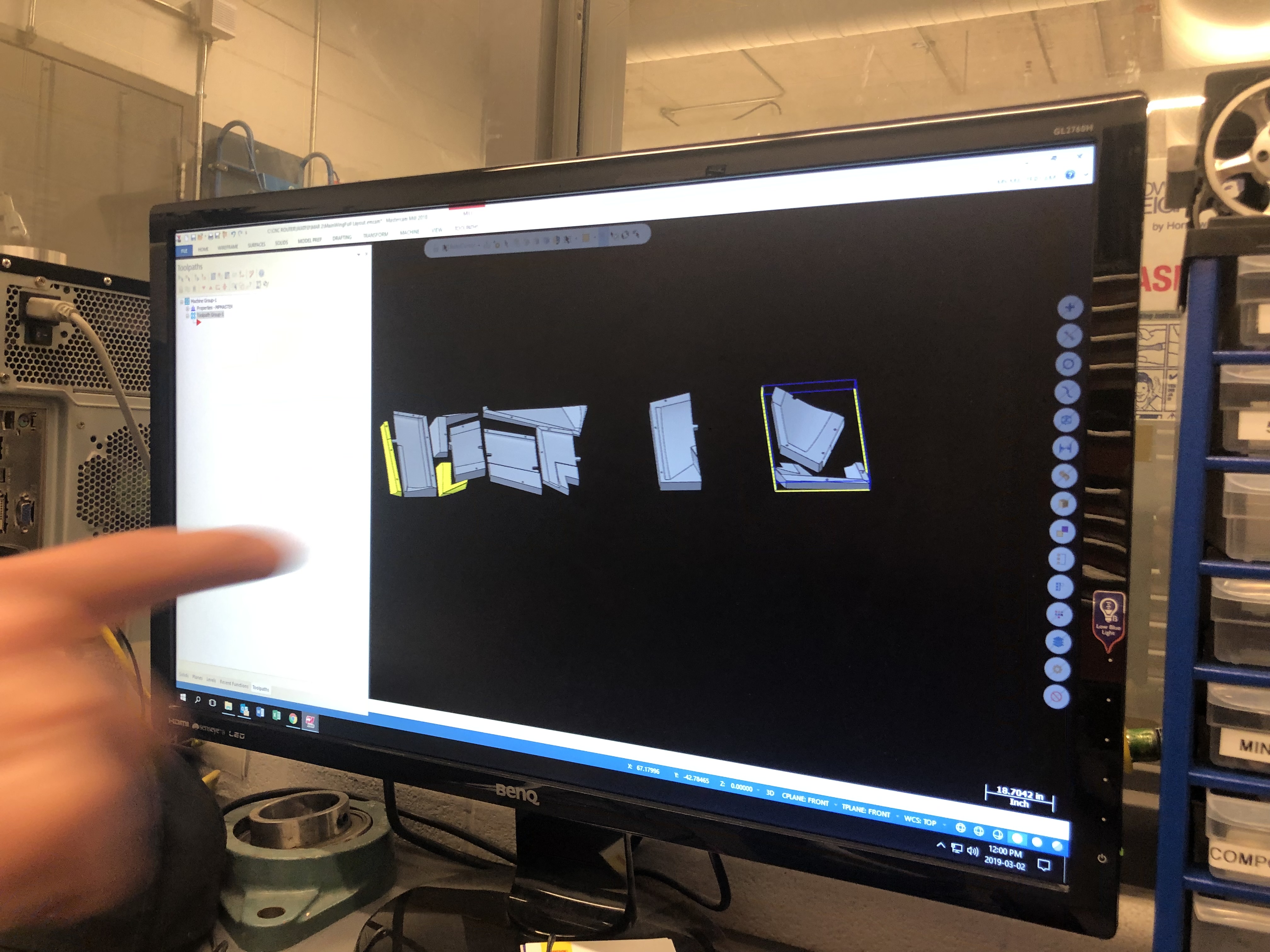
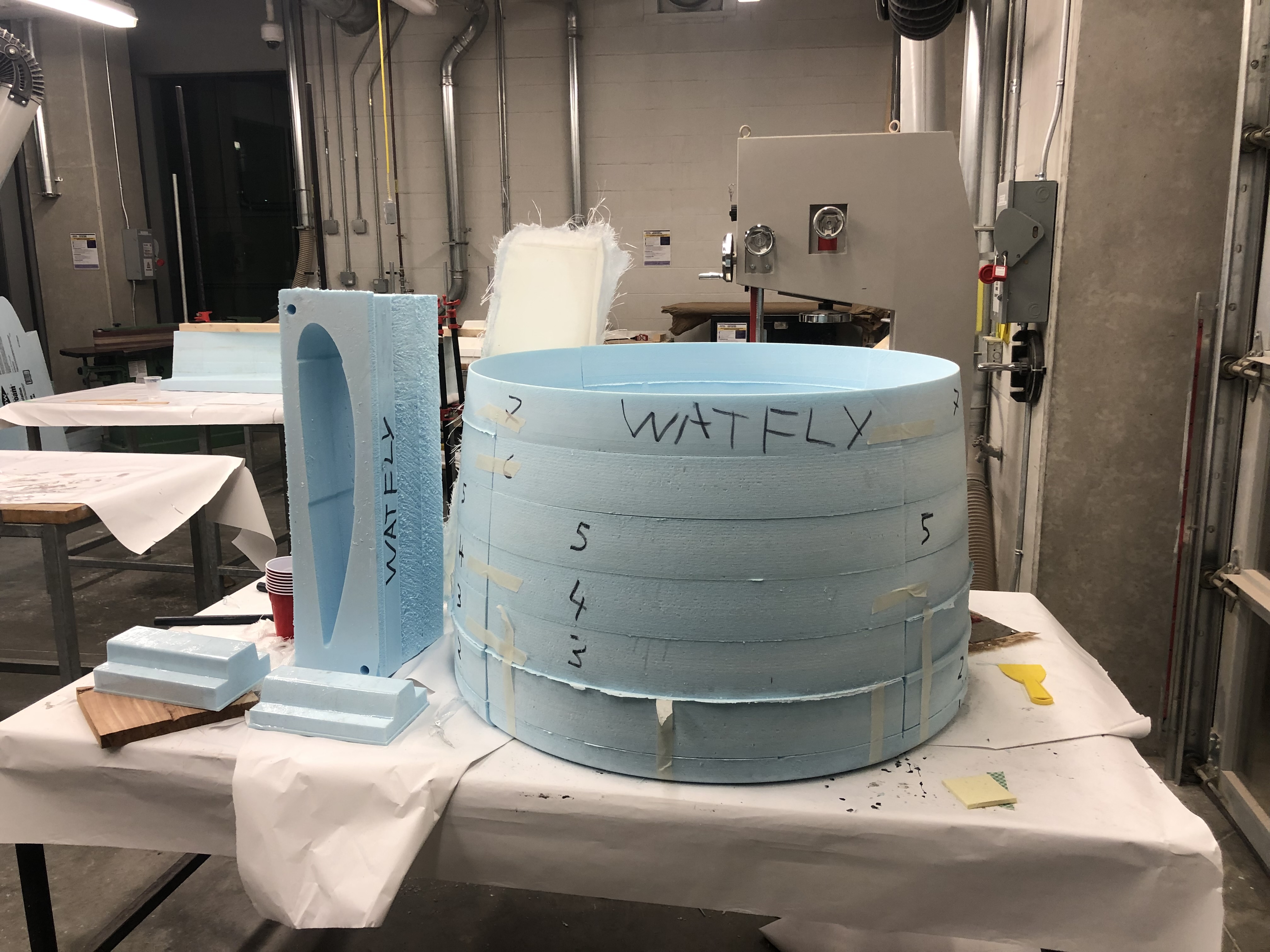
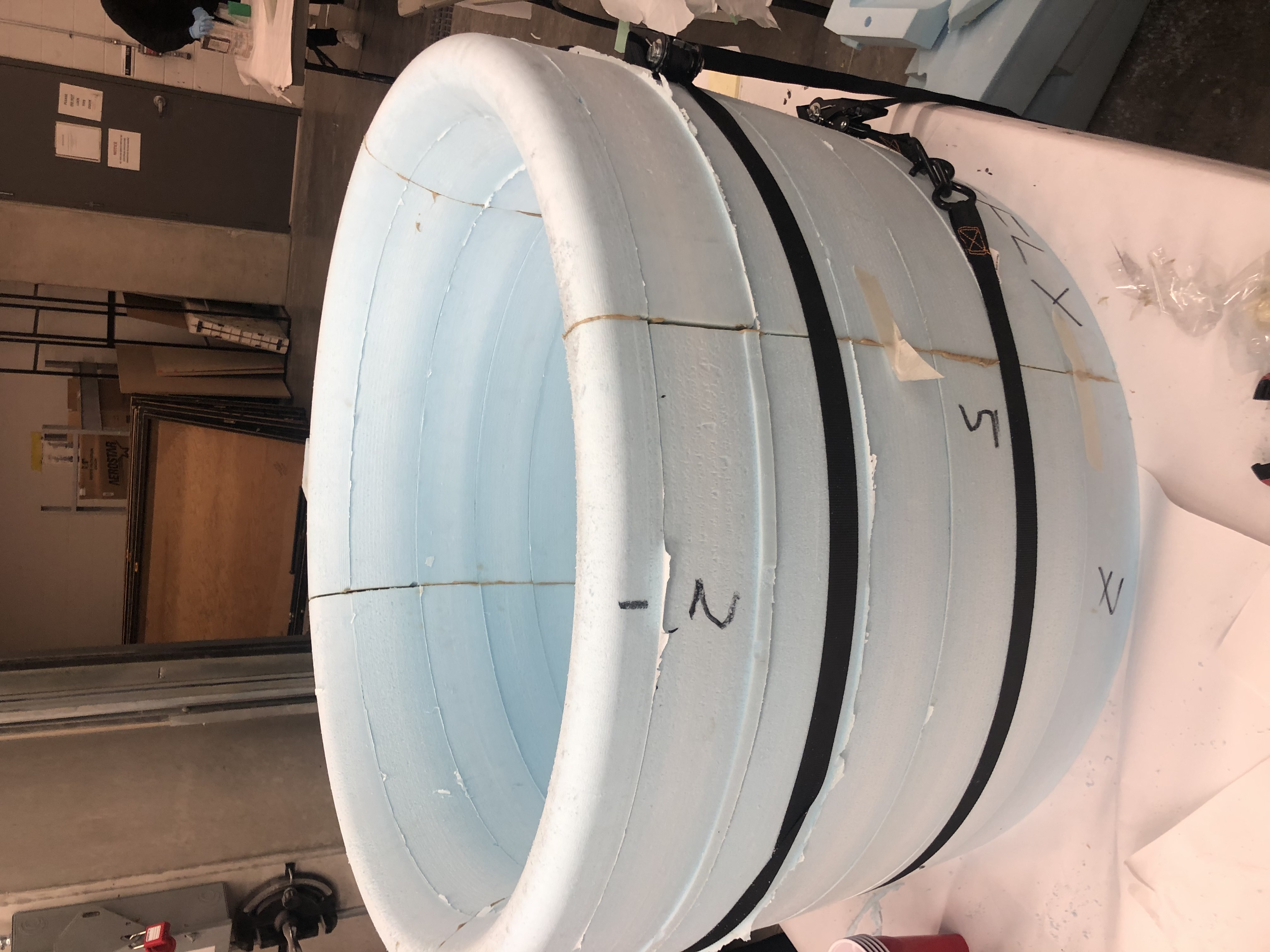
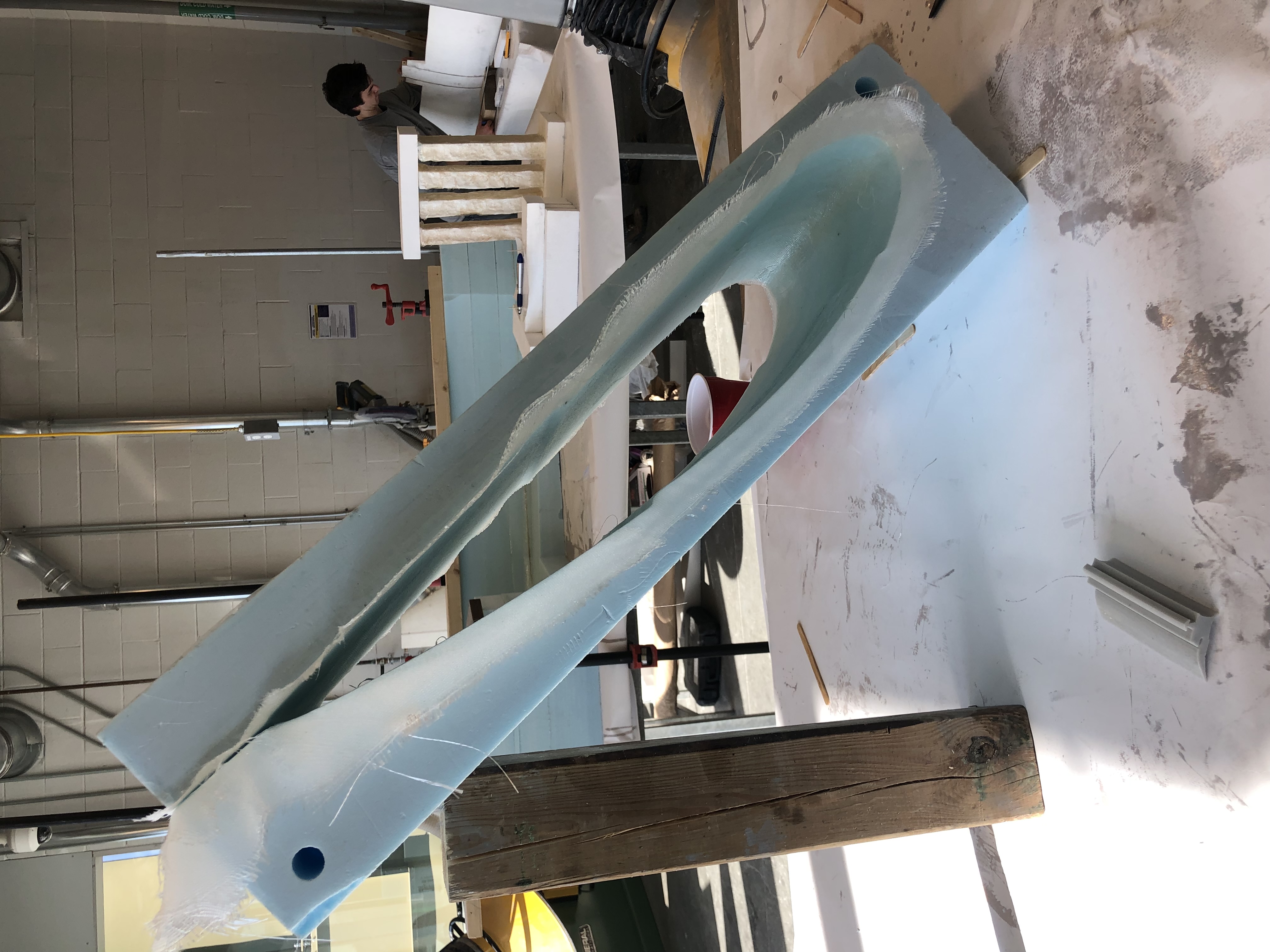
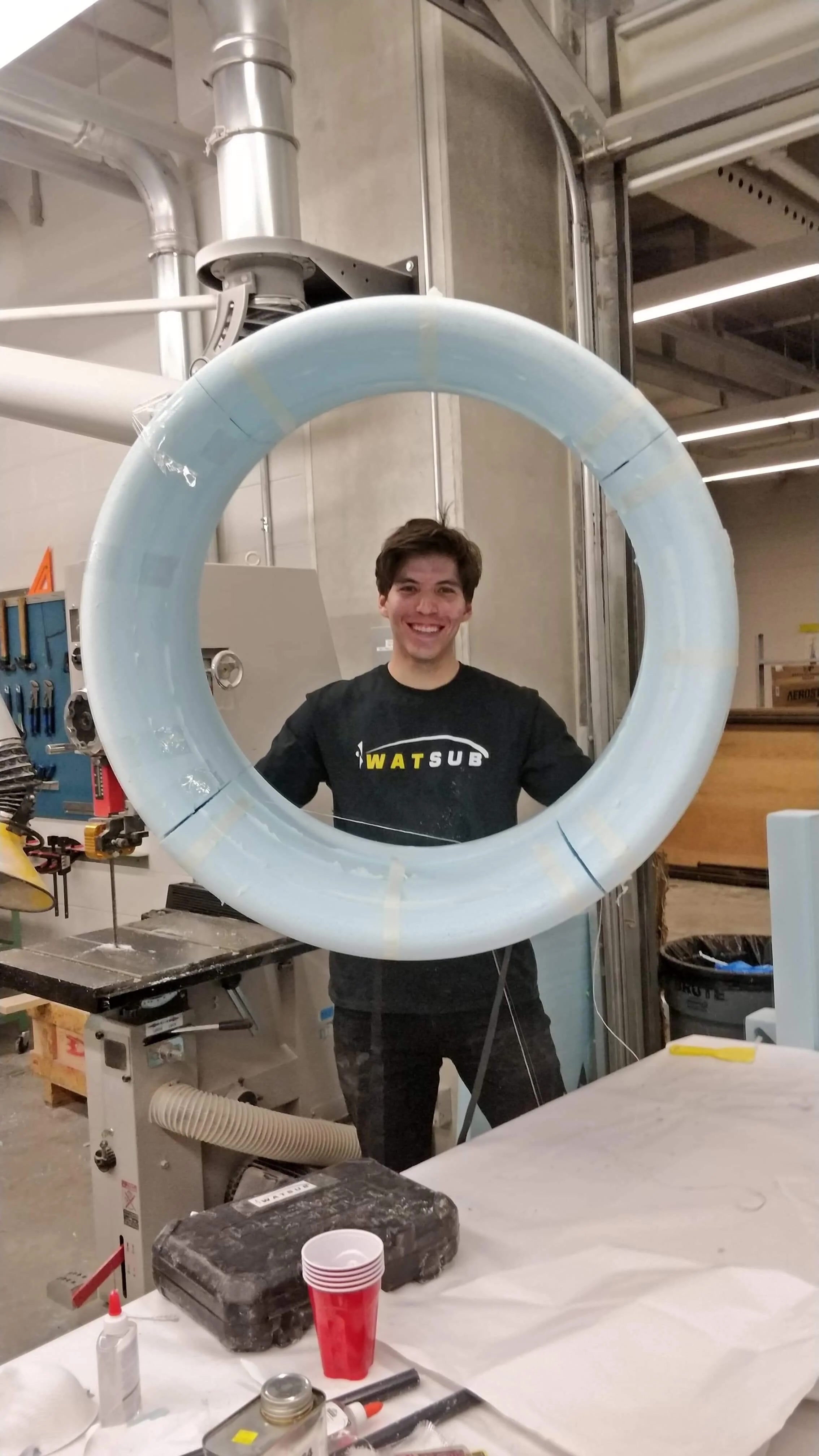
Aerodynamically the interesting part was blown lift: the ducted fans energize the flow over the main wing, so the wing never sees “cruise only” conditions in isolation. We iterated low-fidelity stability and load paths in OpenVSP with actuator disks for the slipstream, then moved to transient CFD in ANSYS Fluent with representative prop geometry and mesh motion so propeller–wing interaction showed up in the pressure field the way a spreadsheet cannot capture. The photos walk through CAD release, mold tooling, layup and bagging, trim and bond of control surfaces, and the finished article ready for tunnel and vehicle testing.
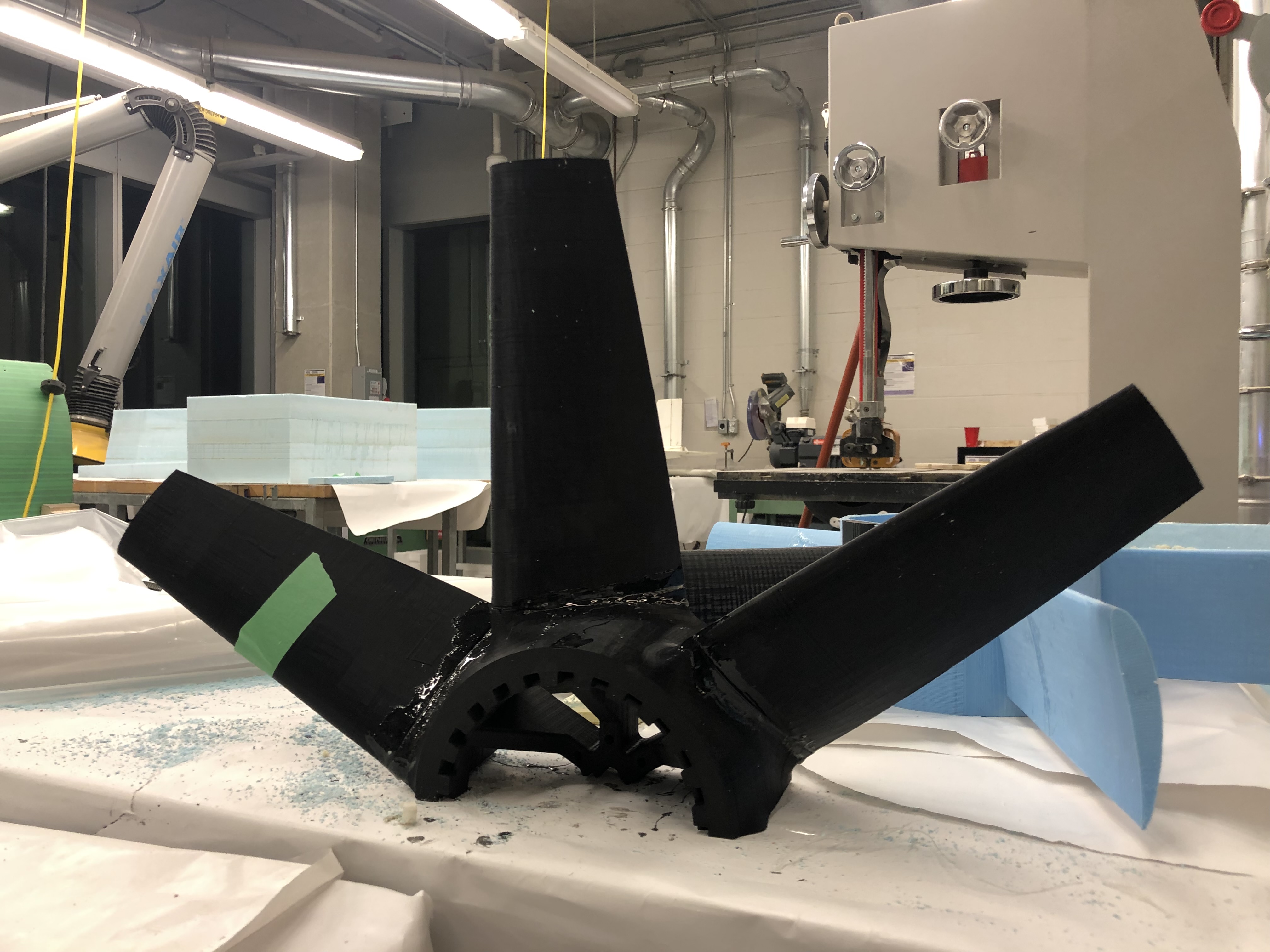
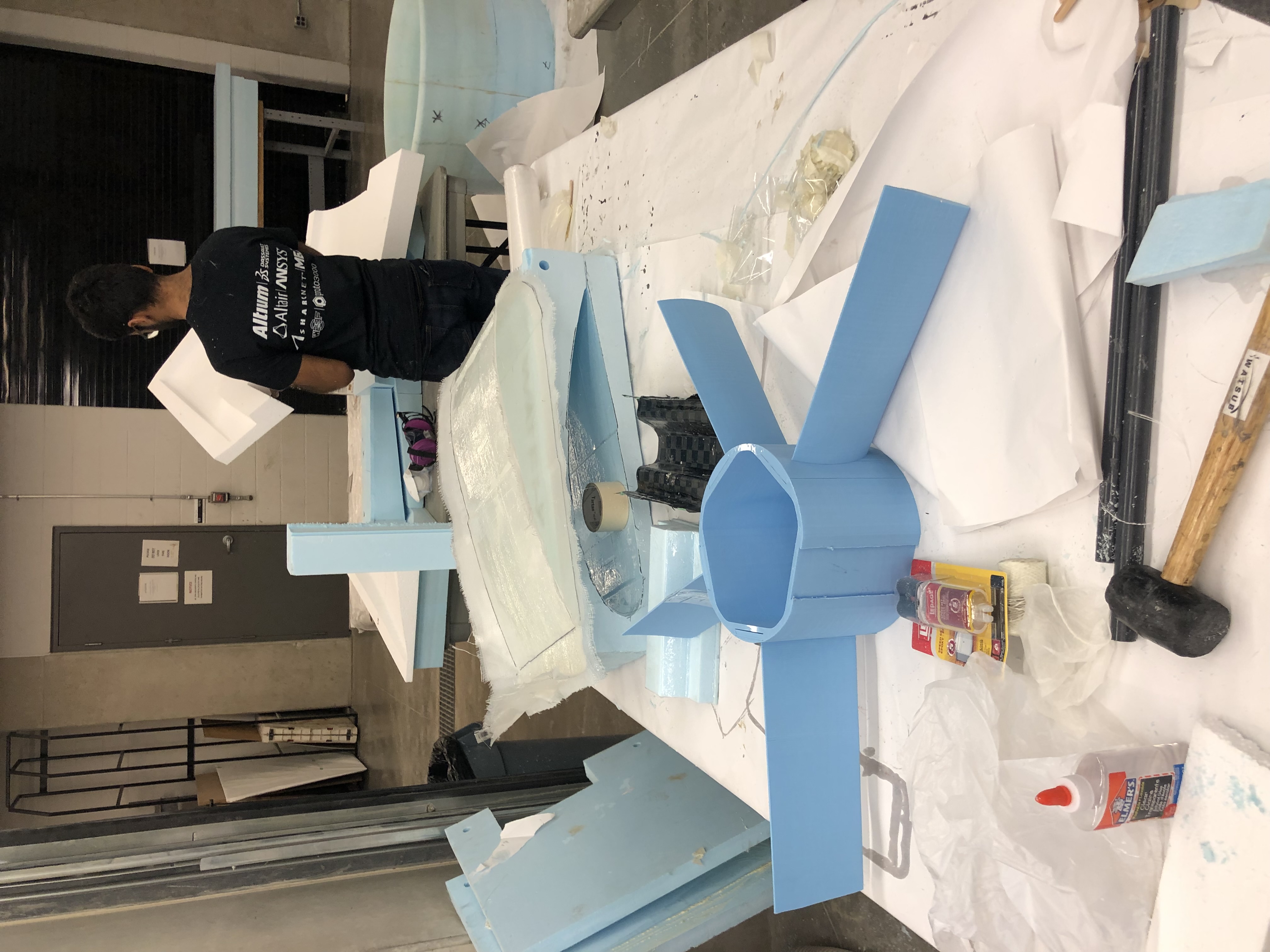
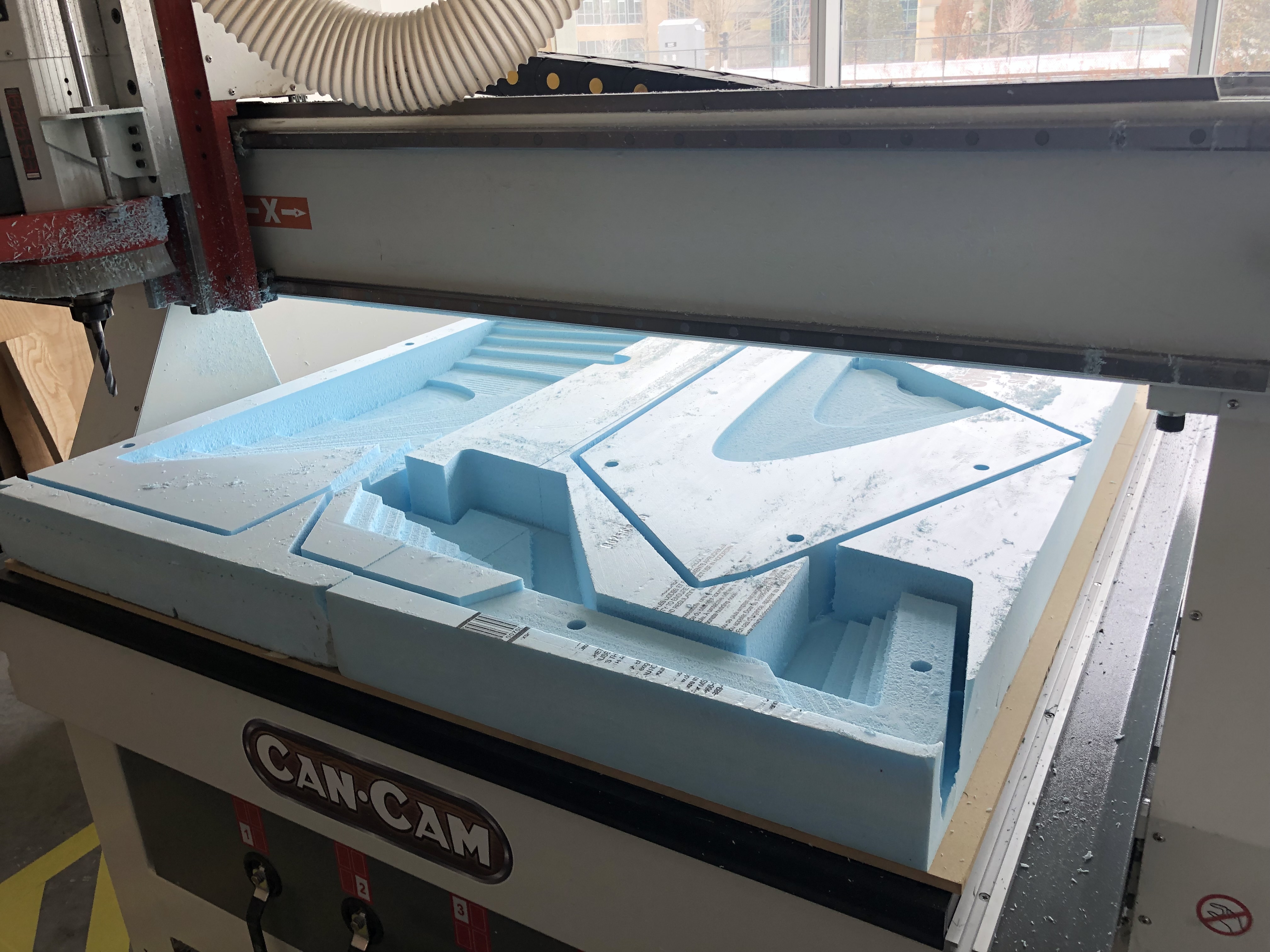
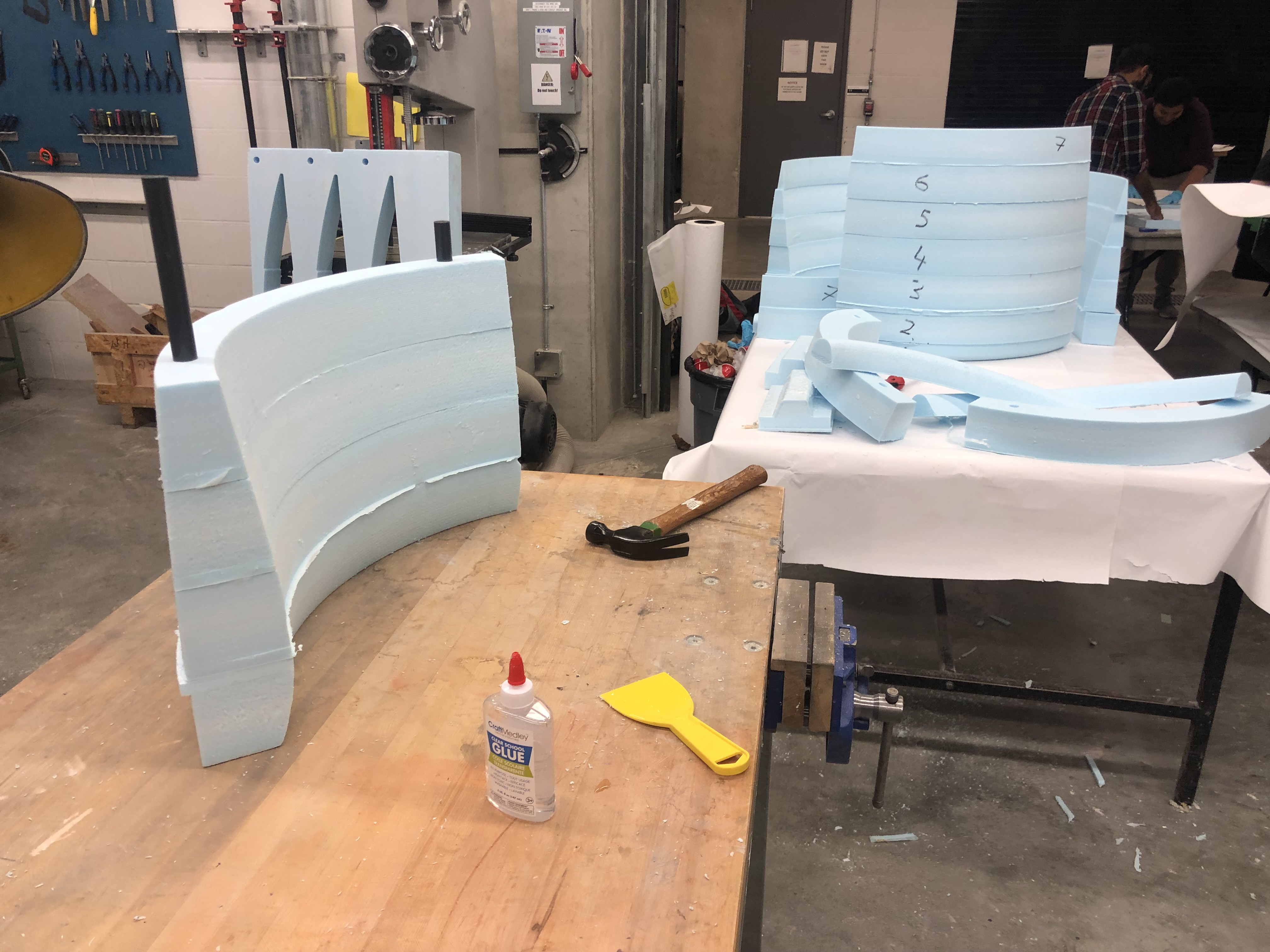
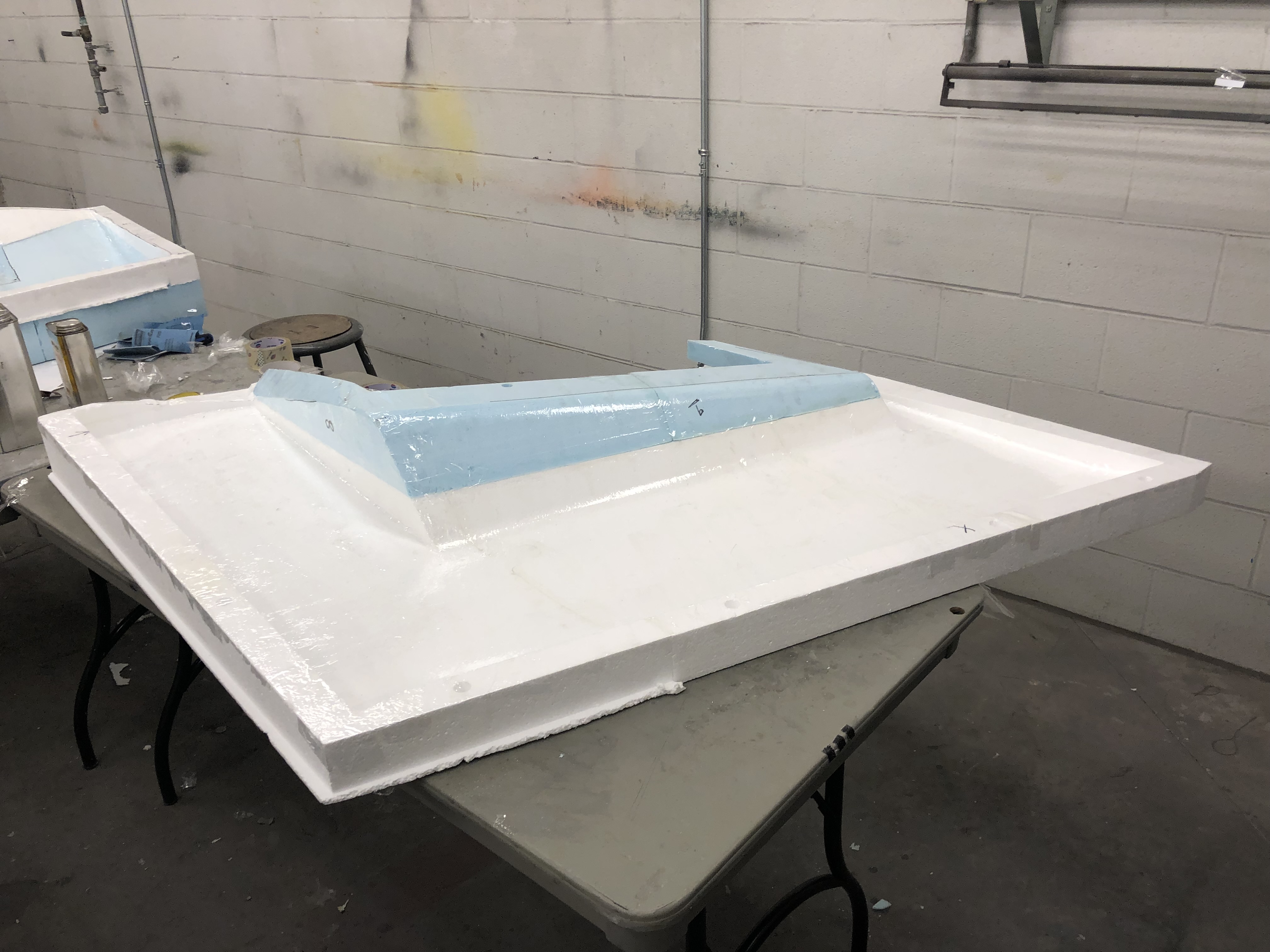
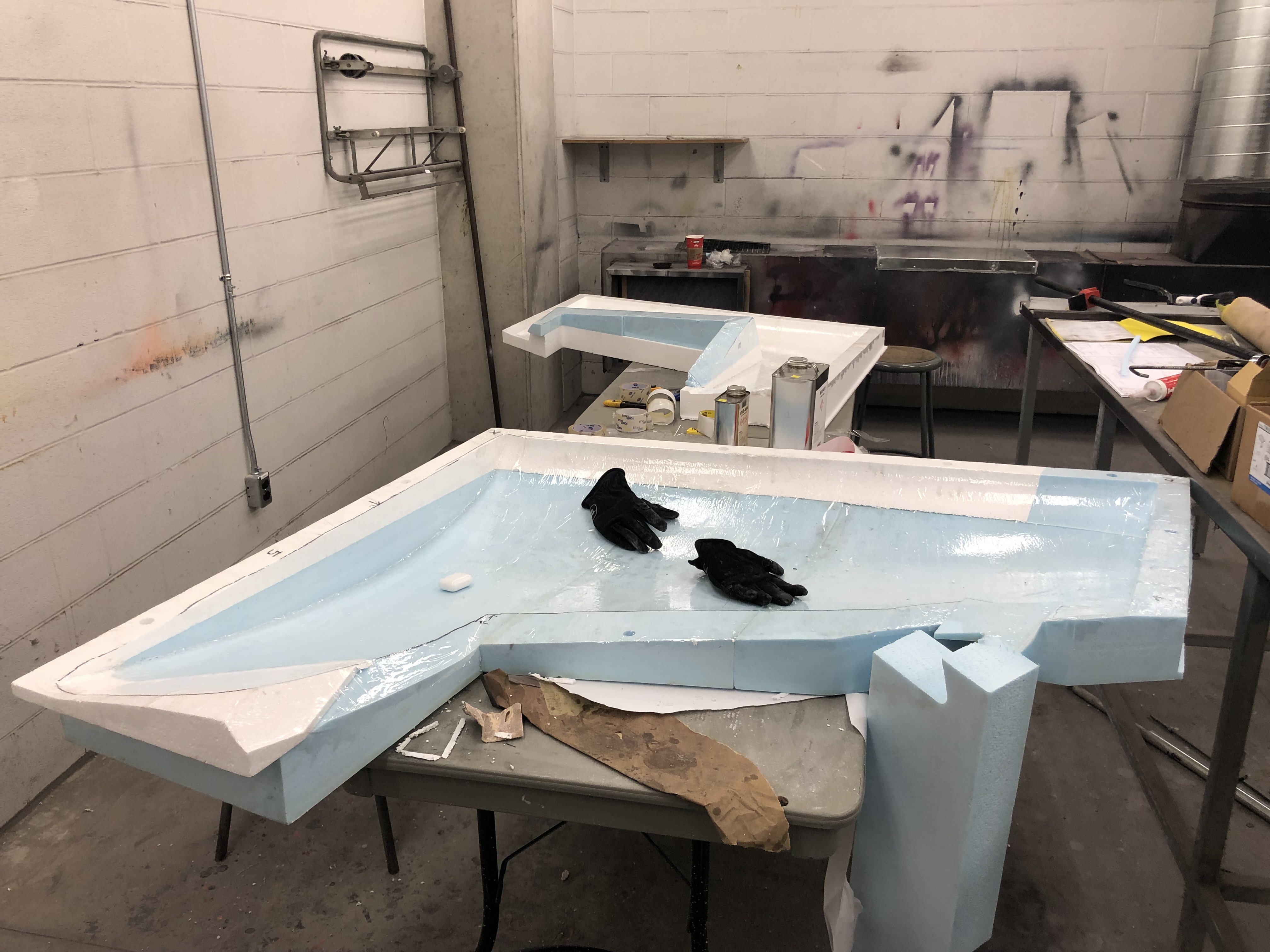
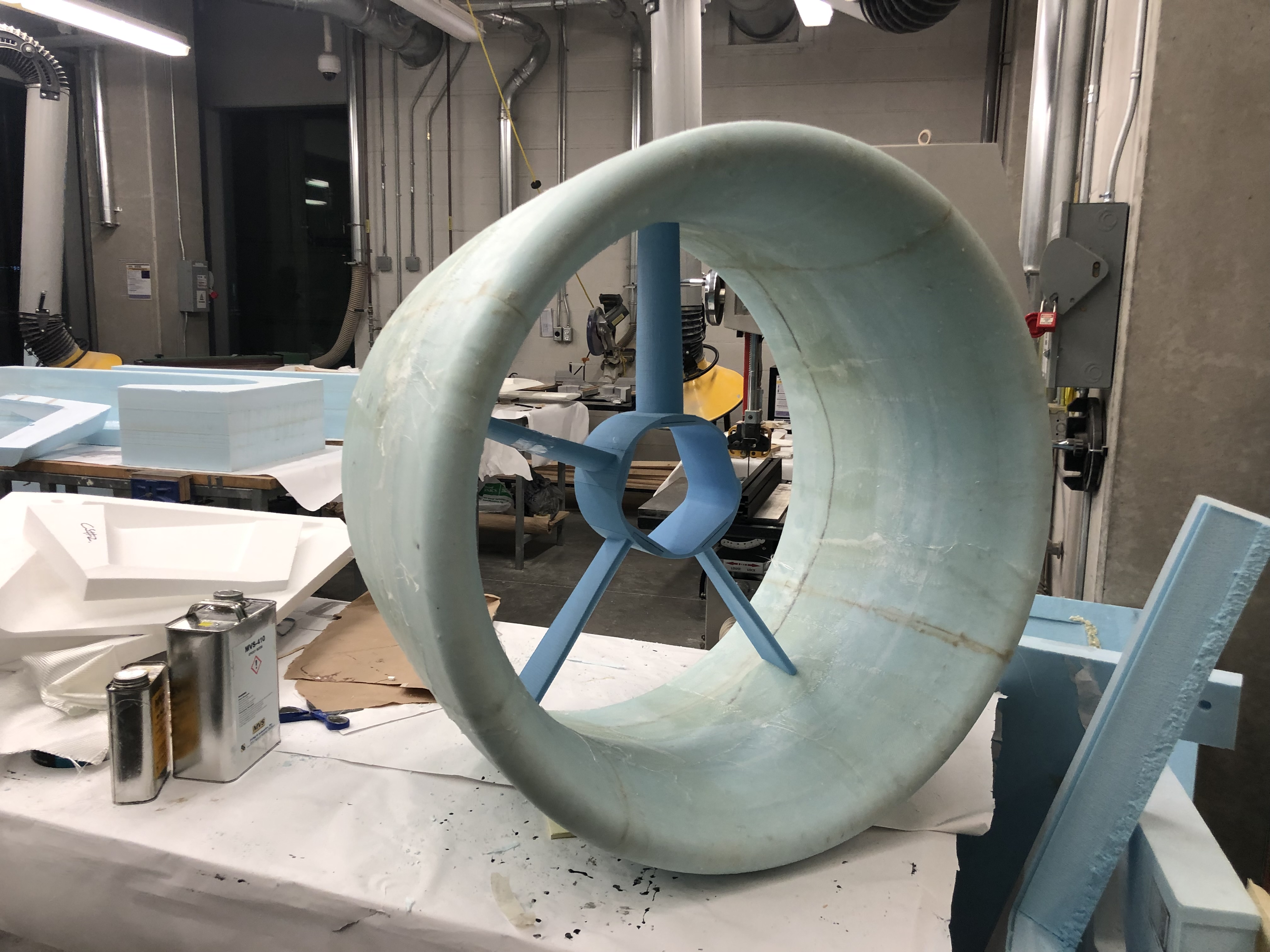
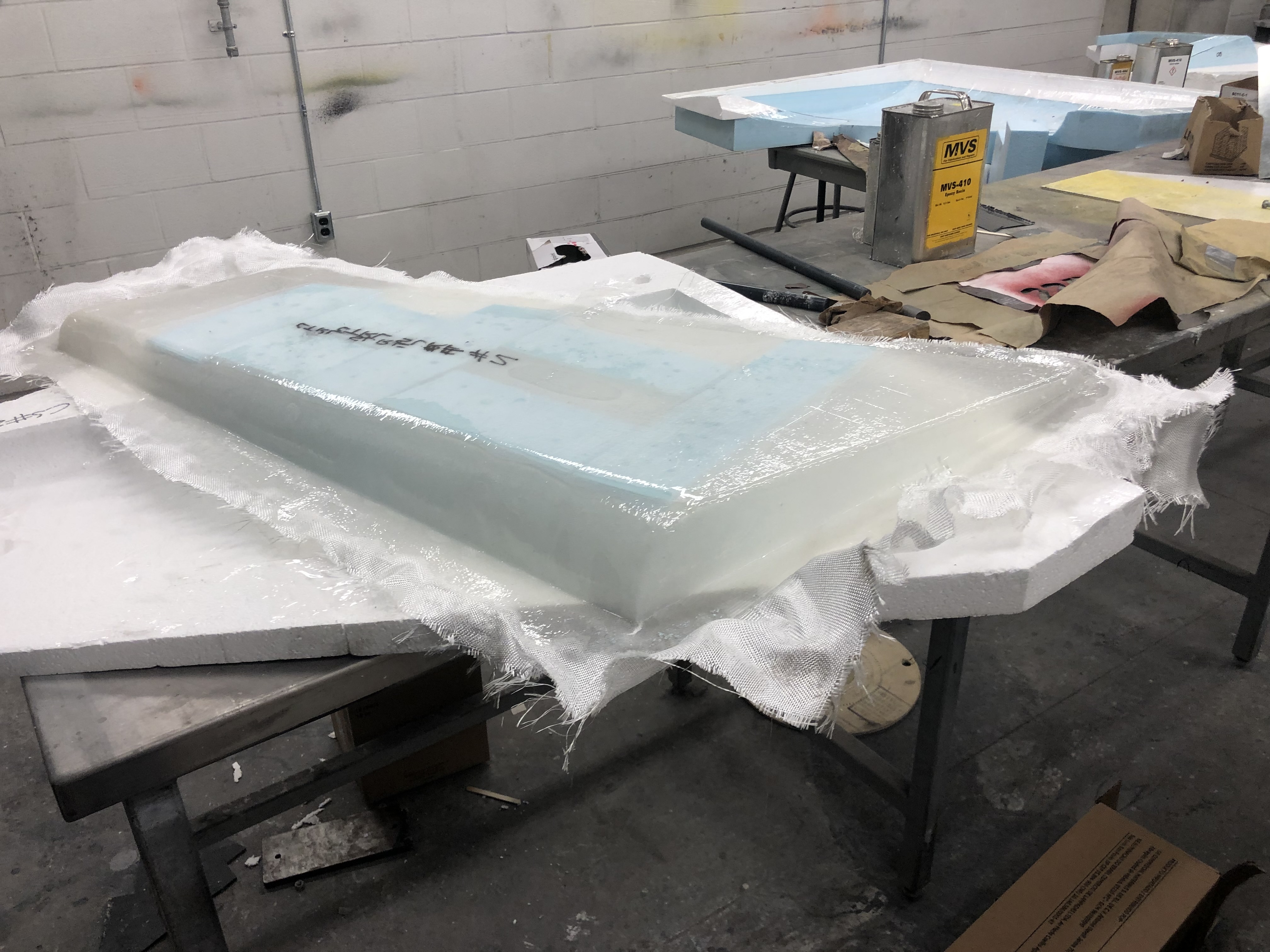
Final assembly and analysis
Analysis was not a postscript; it was how we decided what to build. Besides the CFD stills, we ran controls and trajectory studies in Simulink with the same force bookkeeping we used in spreadsheets (canard, wing, and propeller contributions, including blown velocity over the main wing) to close loops on pitch and velocity and to sanity-check degraded cases like asymmetric thrust. That stack of models is what earned us the ANSYS engineering analysis recognition alongside the hardware.
Final integration was the half-scale airframe you see in the poster: structure, fans, electrics, and instrumentation brought together, then mounted on a truck fixture so we could gather cruise-relevant data without pretending we had a certifiable full flight program. The plan called for GPS ground speed, load sensing, and pressure-based incidence and airspeed channels so we could line road data up with tunnel and CFD. Wind-tunnel time at ACE was on the calendar for the wing alone to characterize stall and blown-wing behaviour at increasing fidelity. The last frames are the capstone booth and a reminder of where I went next mechanically: smaller rotors, same obsession with thrust and mass.